-

AI Versus the Books of History: Can Artificial Intelligence Replace Knowledge That Can No Longer Be Updated?
For most of human history, books have been one of our most powerful technologies for preserving knowledge. They have carried ideas across borders, protected discoveries from being forgotten, and allowed a person living centuries later to encounter the mind of someone long gone. But books have a fundamental limitation: once published, they become fixed.…
-

How to Improve Information Security When Using Cloud-Based LLMs: Organizational and Business Strategies
1. Introduction: Cloud LLMs Are Powerful, but They Change the Security Model Cloud-based Large Language Models are becoming part of daily business operations. Companies use them for customer support, software development, document analysis, legal review, marketing, HR, finance, research, and decision-making. The value is clear: faster workflows, better automation, lower operational costs, and access…
-

Data Security When Sending Information to LLMs and Cloud AI Systems
Introduction: The New Data Security Challenge Large Language Models and cloud-based AI systems are becoming part of daily business operations. Companies now use AI to summarize documents, write emails, analyze code, process customer messages, generate reports, search internal knowledge, and support decision-making. This creates a powerful productivity advantage, but it also introduces a serious…
-
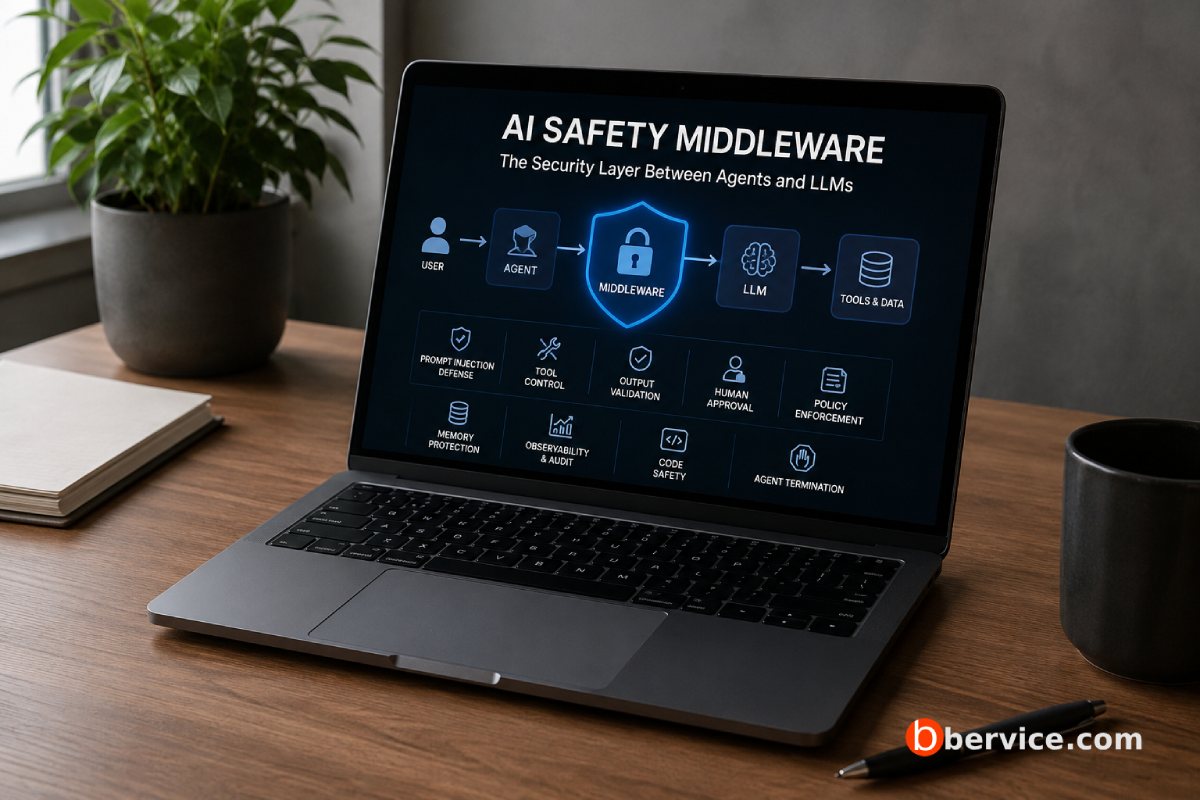
The Rise of AI Safety Middleware: The Security Layer Between Agents and LLMs
Introduction: Why AI Needs a Middle Layer Artificial intelligence is moving from simple chatbots to autonomous agents. A chatbot mostly responds to questions. An AI agent can read files, call APIs, send emails, update databases, write code, browse tools, trigger workflows, and make decisions across multiple systems. This shift creates a new security problem.…
-

AI Safety in 2026: Mechanisms Designed to Prevent Harmful Errors to Systems and Humans
Introduction: Why AI Safety Became a Core Engineering Problem By 2026, artificial intelligence is no longer only a research topic or a productivity tool. AI systems are now used in healthcare, finance, cybersecurity, education, software development, recruitment, customer support, government services, and industrial operations. This wider adoption has created a serious question: how can…