-

Ghost Instances in Distributed Systems Invisible Resilience or Architectural Illusion?
Introduction Modern distributed systems are built to survive failure, overload, and hostile environments. As architectures become more complex, engineers explore patterns that go beyond traditional autoscaling, redundancy, and observability. One such concept—often discussed in security-critical circles is the idea of Ghost Instances: service replicas that remain dormant or invisible under normal conditions and activate…
-

Invisible Protocols When Networks Communicate Beyond the Reach of Packet Sniffers
Most engineers cling to the illusion that packet-level visibility is the final source of truth. It isn’t. Modern distributed networks have evolved to the point where parts of the system remain active, coordinated, and decision-capable even when no observable IP packets exist. Mesh architectures, SDN overlays, and embedded avionics networks increasingly exchange metadata through…
-

Threads That Think They Are Independent But They Never Truly Are
In concurrent programming, every thread behaves as if it owns its timeline. It “believes” it runs independently, executes its logic, and progresses based on its internal state. But this sense of autonomy is an illusion. Beneath the surface, a far more powerful entity dictates the true order of reality: the scheduler. The Illusion of…
-
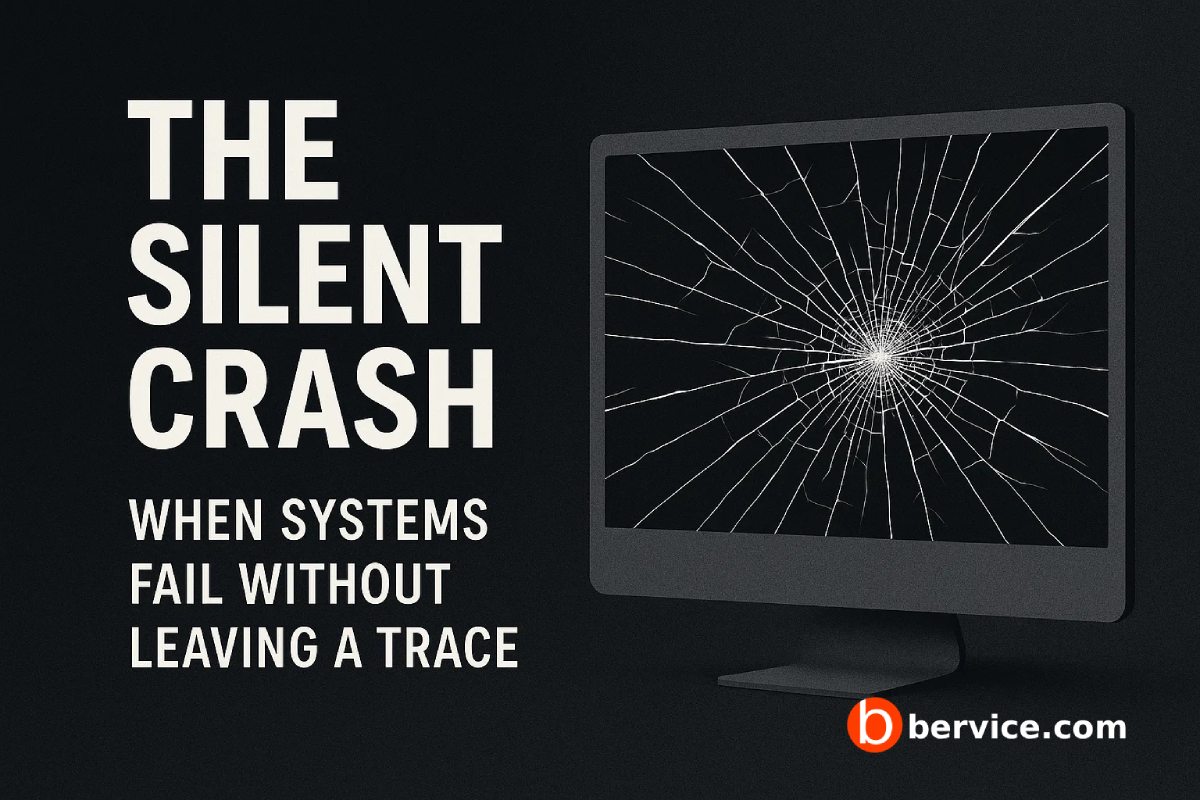
The Silent Crash: When Systems Fail Without Leaving a Trace
In distributed systems, cloud platforms, and high-performance infrastructures, the most dangerous failures are not the ones that fill dashboards with red alerts they are the ones that vanish without a footprint. A silent crash is the nightmare scenario every serious engineer eventually faces: the system collapses, data disappears, and yet no error is logged.…
-

System-Wide Exception Management in Distributed Architectures
Distributed systems don’t fail gracefully they fail loudly and non-linearly. A single unhandled exception in one microservice can trigger a chain reaction that takes down queues, overloads upstream dependencies, and ultimately collapses the entire platform. Effective exception management in this environment is not about catching errors; it’s about designing an architecture that absorbs failures…