-

Intelligent Traffic Distribution with Layer 7 Load Balancers
Introduction: Load Balancing Is Not Just Distribution In modern cloud-native architectures, handling traffic is no longer about simply spreading requests evenly across servers. It is about understanding requests, predicting behavior, and making context-aware routing decisions. This is where Layer 7 (Application Layer) Load Balancers fundamentally change the game. Unlike lower-layer balancers, Layer 7 load…
-

Immutable Infrastructure and the Reduction of Human Error
Human error is not a weakness of individuals it is a predictable outcome of complex systems operated under pressure. In traditional infrastructure models, servers are treated as long-lived assets. They are logged into, patched manually, configured incrementally, and “fixed” in place. Every such action introduces drift. Over time, no two servers are truly identical,…
-

Observability Deep Visibility into System Behavior Beyond Logs
Modern systems don’t fail loudly anymore they fail subtly. Latency creeps up, error rates spike only under specific conditions, or a single downstream dependency slows everything without throwing an obvious error. If your only line of defense is logs, you are already late. Observability is not just another monitoring buzzword. It is a discipline…
-

Ghost Instances in Distributed Systems Invisible Resilience or Architectural Illusion?
Introduction Modern distributed systems are built to survive failure, overload, and hostile environments. As architectures become more complex, engineers explore patterns that go beyond traditional autoscaling, redundancy, and observability. One such concept—often discussed in security-critical circles is the idea of Ghost Instances: service replicas that remain dormant or invisible under normal conditions and activate…
-
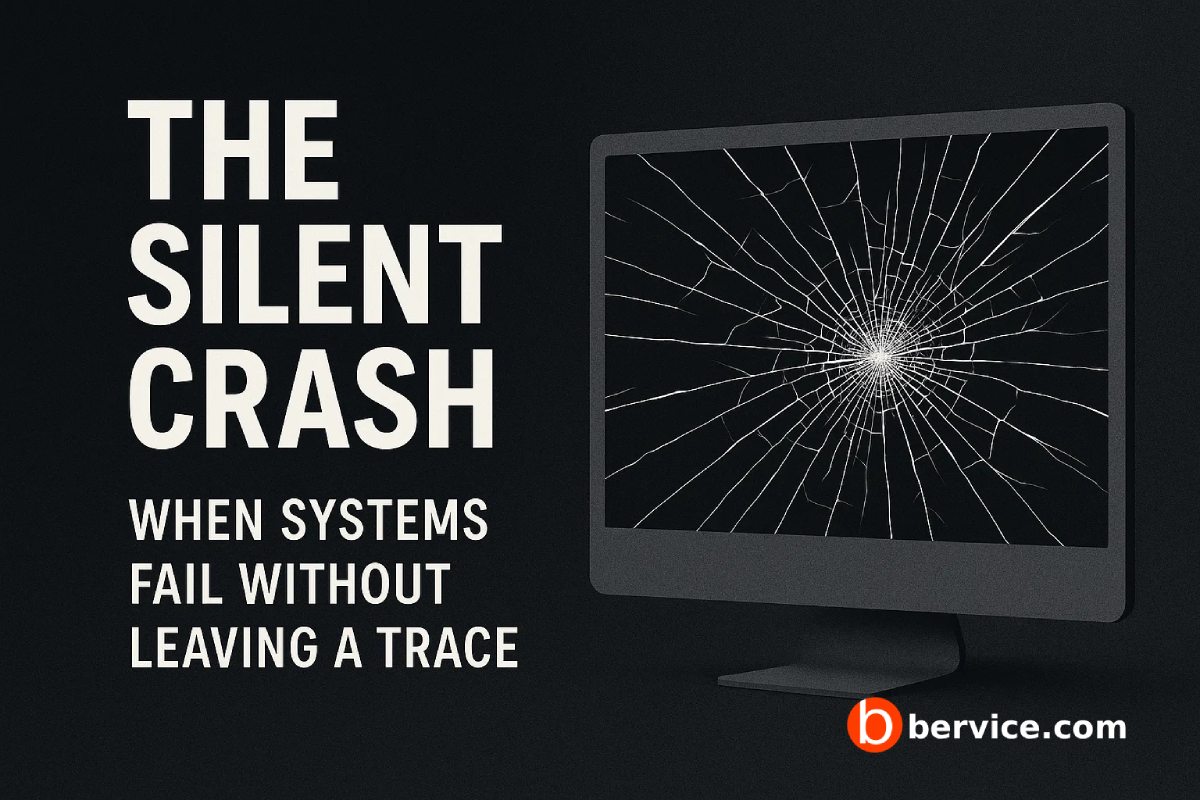
The Silent Crash: When Systems Fail Without Leaving a Trace
In distributed systems, cloud platforms, and high-performance infrastructures, the most dangerous failures are not the ones that fill dashboards with red alerts they are the ones that vanish without a footprint. A silent crash is the nightmare scenario every serious engineer eventually faces: the system collapses, data disappears, and yet no error is logged.…