-
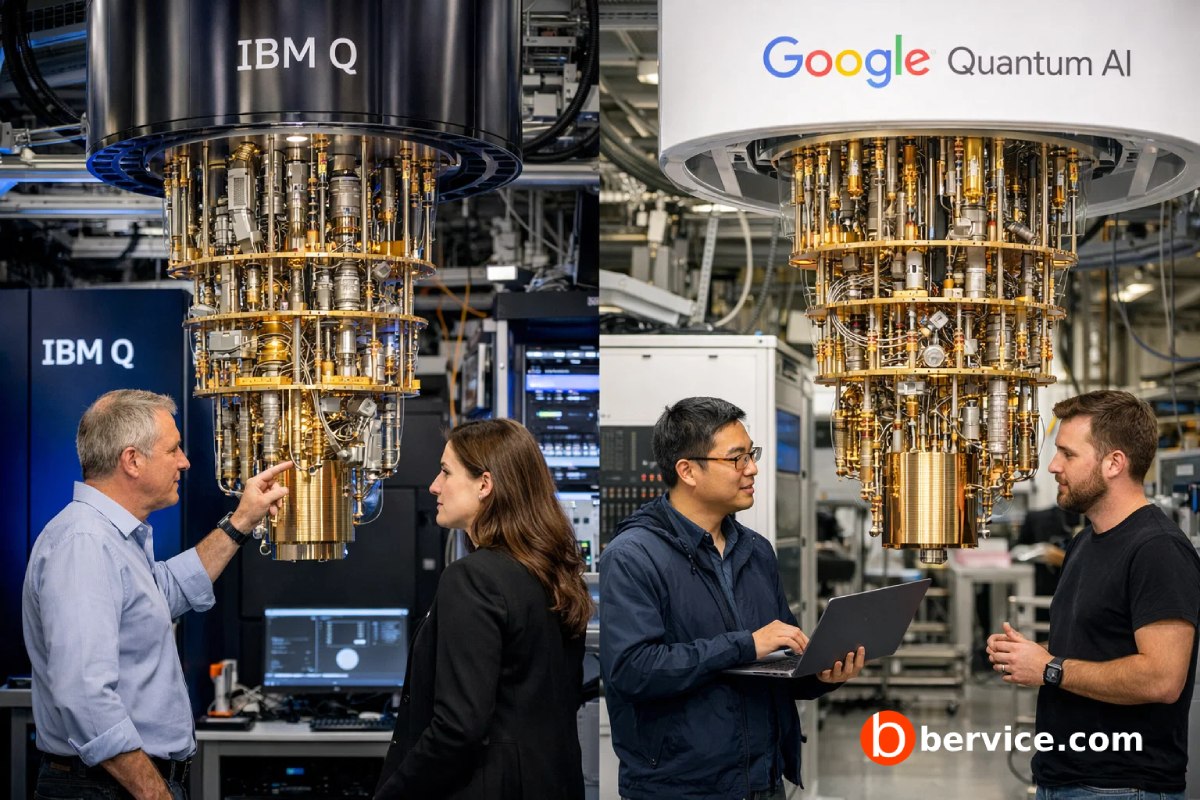
The Role of IBM and Google in Building Quantum Computing Infrastructure
Quantum computing is often described through eye catching milestones like qubit counts or headline demonstrations of “quantum advantage.” But the real long term race is infrastructure: the hardware engineering, control stacks, software toolchains, cloud access models, error correction strategy, and integration with classical high performance computing that collectively turn fragile lab devices into usable…
-

What Is the Quantum Internet?
The Quantum Internet is a next generation communication network that uses the laws of quantum physics to transmit information in fundamentally new ways. Unlike the classical internet, which sends bits as 0s and 1s, the quantum internet relies on quantum bits or qubits, which can exist in superposition and can be linked through quantum…
-

The Day Quantum Computers Broke the Internet
A Cautionary Scenario of Unprepared Infrastructure Prologue: The Morning Nothing Failed The day began quietly. No alarms. No warnings. Banks opened. Hospitals ran. Governments logged in.Every system reported green. Somewhere else, far from public dashboards and compliance reports, the first large scale fault tolerant quantum computer finished a calculation that classical machines would need…
-

Quantum Vulnerabilities in Modern Cryptography
A Historical Perspective and a Forward-Looking Defense Strategy Introduction A Threat That Arrives Late but Strikes Early Quantum computing does not yet pose an operational threat to today’s cryptographic systems. No publicly known quantum computer can currently break RSA, ECC, or other widely deployed public-key schemes at meaningful scales.However, this apparent safety is deceptive.…
-

The Power of Serverless Architecture in Eliminating Infrastructure Complexity
In traditional application development, a significant portion of time and resources is spent managing infrastructure: provisioning servers, configuring environments, handling scaling, and maintaining availability. Serverless architecture fundamentally challenges this model by abstracting infrastructure management away from developers, allowing them to focus exclusively on writing business logic. Serverless does not mean “no servers.” It means…