-

IPSec The Hidden Security Layer of the Internet
Before IPSec, the internet operated like an open street with no surveillance every packet was visible, traceable, and easy to manipulate. Data moved fast, but it moved naked. Anyone sitting in the right place on the network path could observe, replay, or tamper with traffic. IPSec was created to fix this fundamental flaw at…
-

Preparing Systems for the Transition to Post-Quantum Cryptography (PQC)
How to Migrate Safely and Stay Ahead of Quantum Attacks Quantum computing is not a distant academic fantasy anymore. The moment a sufficiently powerful quantum computer becomes available, a large portion of today’s cryptographic infrastructure will collapse overnight. If your systems are not prepared before that moment, no patch, hotfix, or emergency migration will…
-
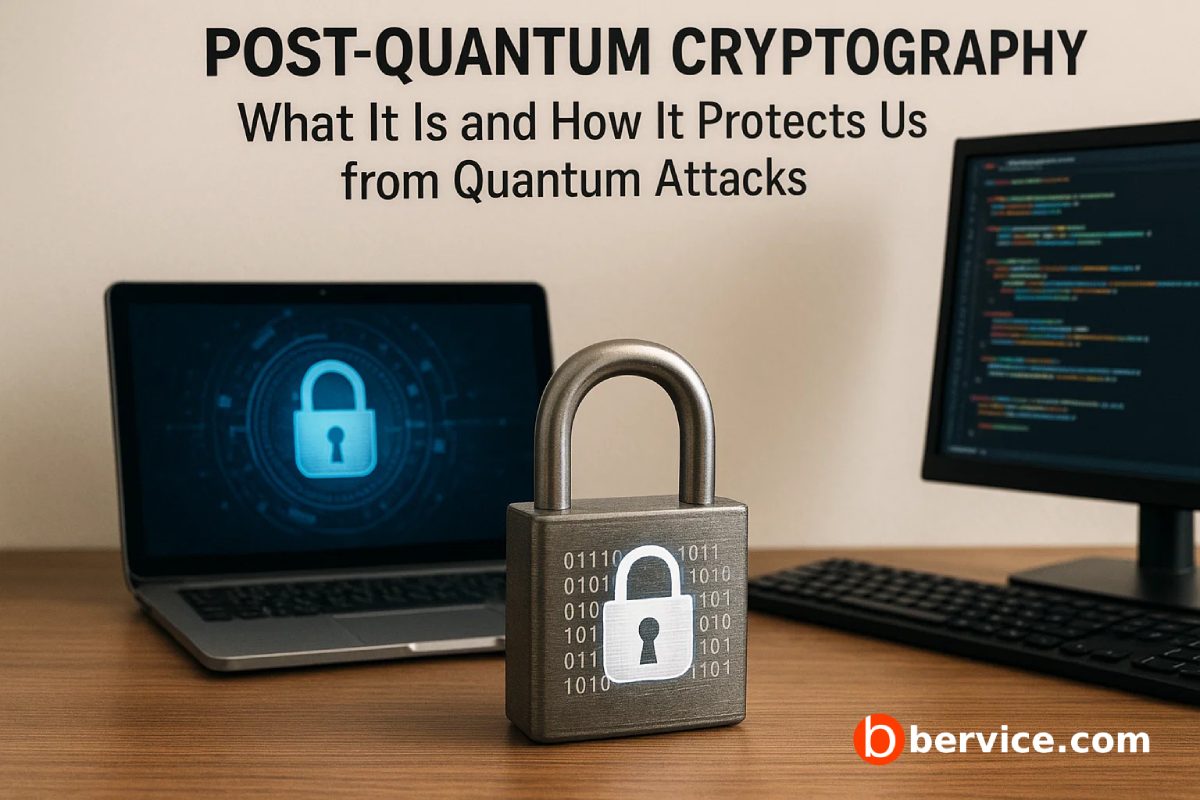
Post-Quantum Cryptography: What It Is and How It Protects Us from Quantum Attacks
Introduction The digital world depends on cryptography that was designed for classical computers. Protocols like RSA, Diffie–Hellman, and elliptic-curve cryptography (ECC) secure everything payments, messaging, software updates, VPNs, authentication.But here’s the uncomfortable truth: a sufficiently powerful quantum computer can break all of them using Shor’s algorithm. This is exactly why post-quantum cryptography exists. PQC…
-

Backdoors at the BIOS Level: When the Infection Lives Below the Operating System
Cyber-attacks usually fight in the world you can see files, processes, drivers. But the most dangerous threats don’t play in that arena. They go underneath everything, burying themselves in the firmware that initializes the machine long before any OS boots. These are BIOS/UEFI-level backdoors, and once they get a foothold, they operate with a…
-
Hidden Log Manipulation & Tamper Chains: Why Modern Systems Fail Without Cryptographically Verifiable Logging
In any distributed system, logs are the only surviving witnesses when something goes wrong. Code can fail silently, containers can restart, agents can hang, and monitoring dashboards can mislead, but logs capture ground truth — or at least, that’s the assumption. In reality, logs are frequently the weakest security link, and adversaries know this.…