-

The Rise of Local AI Executives: Automating Leadership Without Sacrificing Privacy
Introduction: A Shift in How Decisions Are Made For decades, the role of founders, CEOs, and senior executives has revolved around decision-making, coordination, and strategic thinking. These responsibilities require constant attention, deep context awareness, and access to sensitive data. Traditionally, software has supported these roles, but not replaced them. However, a new paradigm is…
-
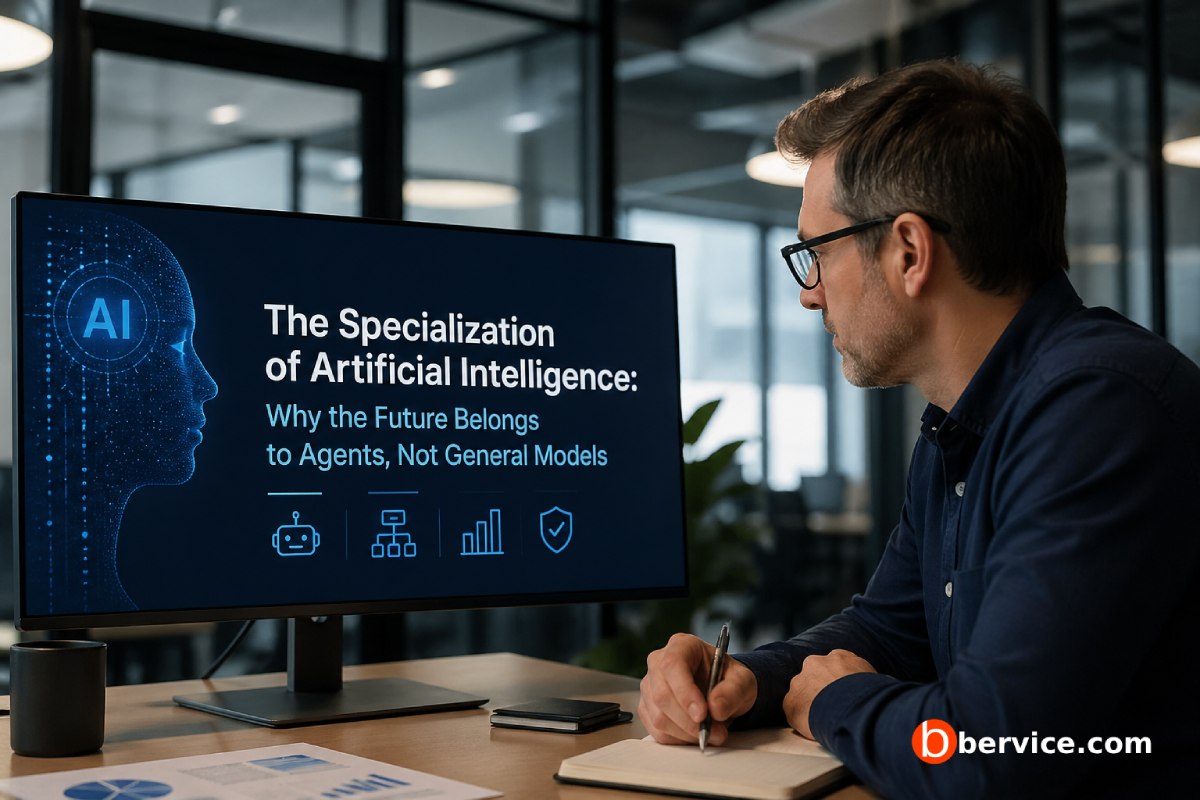
The Specialization of Artificial Intelligence: Why the Future Belongs to Agents, Not General Models
From General Intelligence to Specialized Capability For years, the dominant vision of artificial intelligence has been centered around the idea of a single, powerful model capable of doing everything. From writing code to analyzing data, answering questions, and even making decisions, general-purpose AI models have been positioned as universal tools. However, in real-world business…
-

How Local AI Agents Can Transform Businesses
From Automation to Intelligent Decision-Making Introduction In recent years, artificial intelligence has rapidly evolved from a cloud-dependent capability into something far more accessible and powerful: local AI agents. These are AI systems that run directly on a company’s own infrastructure, whether on-premise servers, edge devices, or even high-performance personal computers. Unlike traditional SaaS AI…
-

Surviving the AI Wave in Companies
How Humans Can Become Smarter, More Efficient, and More Valuable in the Age of Automation 1. The Real Change Is Already Starting Artificial intelligence is no longer a distant idea. It is quickly becoming a practical force inside companies, handling repetitive tasks, automating workflows, analyzing data, answering customers, writing drafts, organizing information, and supporting…
-
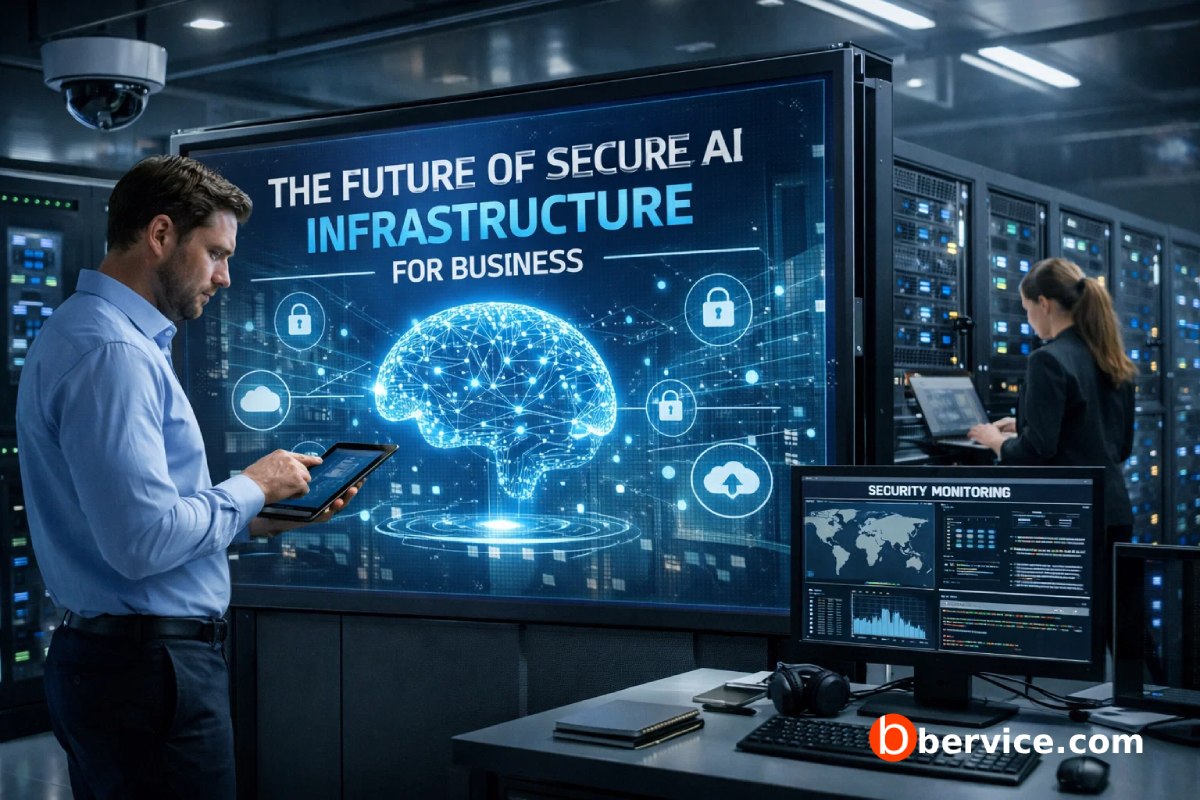
The Future of Secure AI Infrastructure for Business
Introduction: A New Era of AI AdoptionIn the near future, we will see the rise of new digital infrastructures that allow companies, organizations, and users to benefit from artificial intelligence without sacrificing security, privacy, or control over sensitive information. As AI becomes more central to decision making, operations, customer service, internal analysis, and strategic…