-
Quantum-Resilient by Design: A 2026 Playbook for Migrating Critical Infrastructures to Post-Quantum Cryptography
Executive Summary 2026 is the year to move decisively from “planning” to “pilot-at-scale” on post-quantum cryptography (PQC). Core building blocks are ready: NIST finalized the first PQC standards—FIPS 203 (ML-KEM / Kyber), FIPS 204 (ML-DSA / Dilithium), and FIPS 205 (SLH-DSA / SPHINCS+) in August 2024, and selected HQC in March 2025 for an…
-
Is the World Ready for Quantum Computing? Challenges in the Migration to Quantum Infrastructure
Introduction Quantum computing is no longer a distant concept confined to research labs — it is rapidly approaching practical applications that could revolutionize industries from cryptography to drug discovery. With tech giants like Google, IBM, and Microsoft investing heavily in quantum research, the question arises: Is the world ready for the massive infrastructural changes…
-
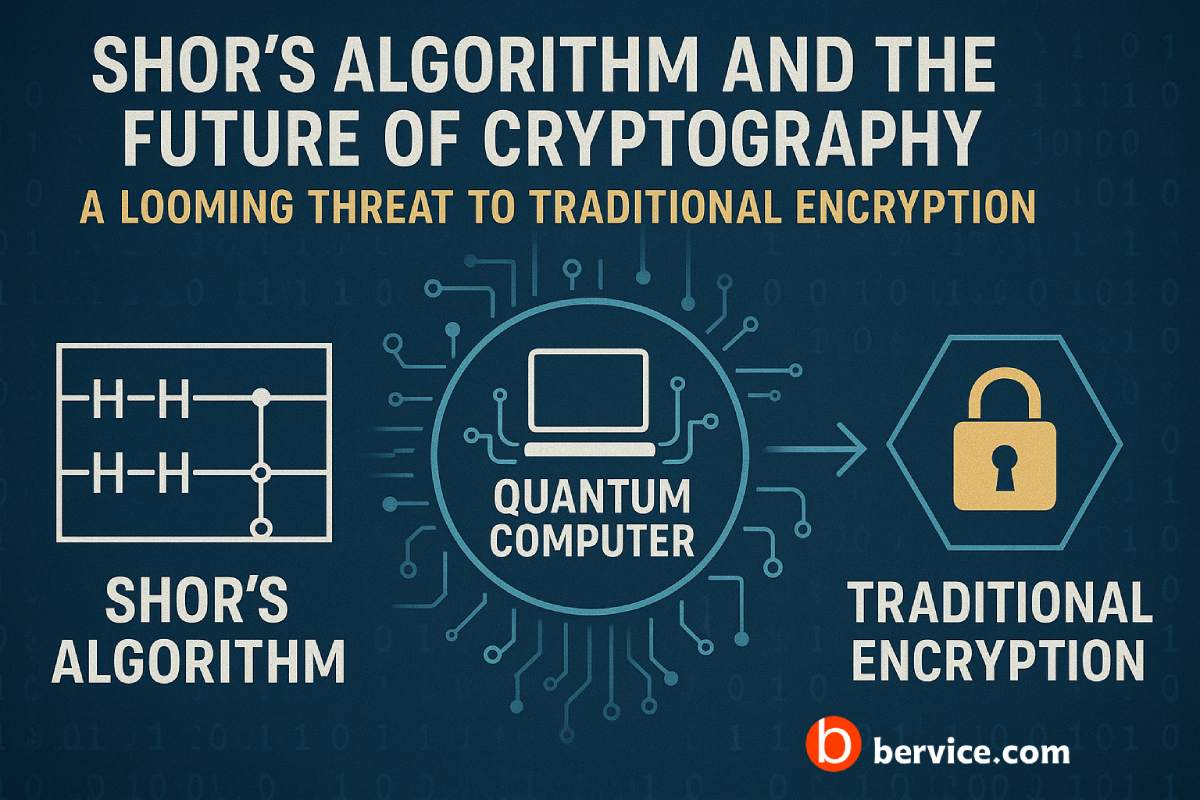
Shor’s Algorithm and the Future of Cryptography: A Looming Threat to Traditional Encryption
Introduction In the realm of modern cryptography, the security of most systems hinges on the difficulty of certain mathematical problems. RSA, ECC, and DH key exchange — pillars of today’s secure communication — all rely on the computational limits of classical computers. But with the rise of quantum computing, particularly the advent of Shor’s…
-
How Quantum Cryptography Can Help Blockchains: Securing the Future of Decentralized Technology
In the race between quantum computing and cybersecurity, quantum cryptography is emerging as a powerful ally—especially for blockchain systems. While quantum computers pose a threat to classical encryption, the very principles of quantum mechanics can also be used to fortify decentralized networks. This article explores how quantum cryptography can actually enhance blockchain security, scalability,…
-
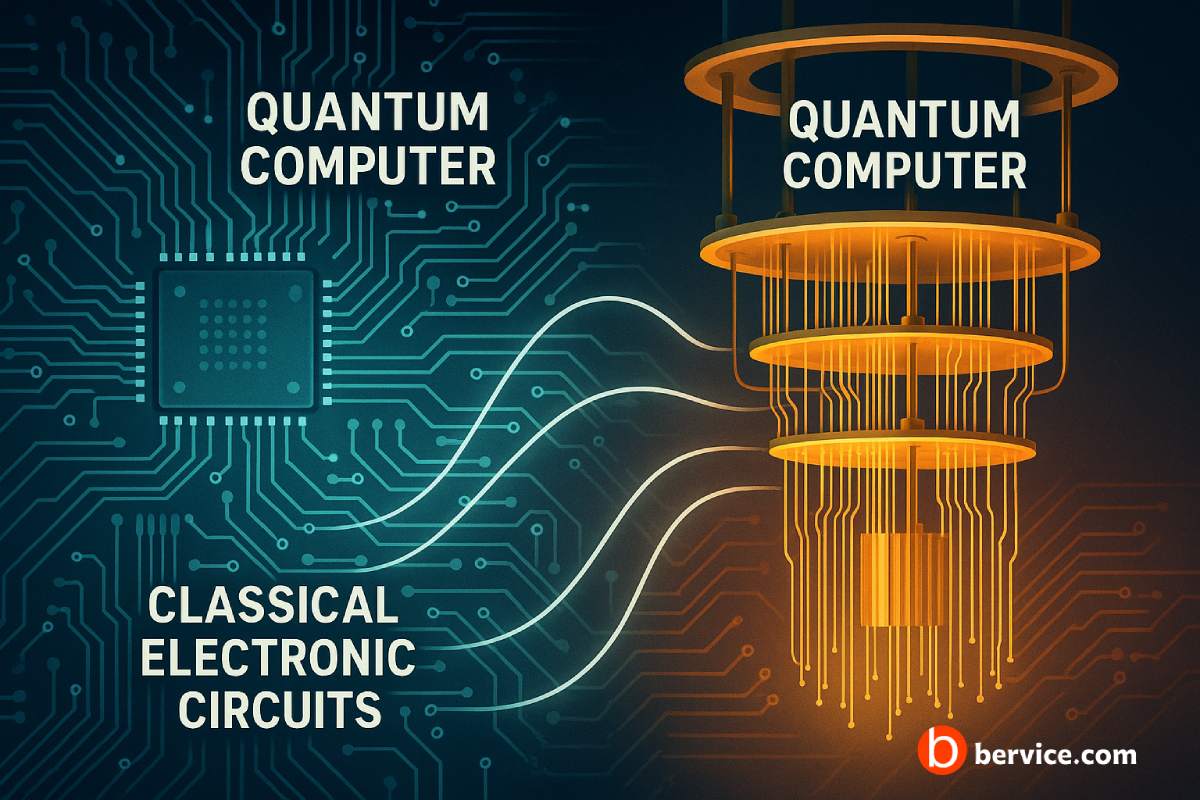
The Interaction Between Quantum Computers and Classical Electronic Circuits
Introduction Quantum computers represent a paradigm shift from classical computing, leveraging the principles of quantum mechanics—such as superposition and entanglement—to solve complex problems exponentially faster than traditional systems. However, quantum computers do not operate in isolation. They require a classical interface to function effectively. Classical electronic circuits still play a critical role in the…