-

10 Tasks Every CEO Should Delegate to AI Today
The New Leadership Playbook for the Age of Intelligent Organizations For decades, the role of a CEO has been defined by one scarce resource: attention. Every day, leaders are forced to decide where to spend their time while drowning in meetings, reports, emails, market changes, and endless operational decisions. Artificial Intelligence changes that equation.…
-

How Artificial Intelligence Accelerates Teamwork Task Management
Introduction Modern organizations face an increasingly complex challenge: managing teams, projects, deadlines, and workflows efficiently. As businesses grow and remote work becomes more common, coordinating tasks across multiple team members can quickly become overwhelming. Traditional project management methods often rely heavily on manual planning, status updates, and human oversight, which can lead to delays,…
-

How Artificial Intelligence Can Reduce Startup Operating Costs by Up to 40%
The New Economics of Startup Efficiency In the modern technology startup environment, survival is no longer determined only by innovation, funding, or speed to market. It is increasingly shaped by operational efficiency. Startups often burn capital not because their ideas are weak, but because their internal processes are fragmented, repetitive, and overly dependent on…
-

Business Intelligence (BI) What It Is, Its Core Components, and Its Practical Applications
Introduction Business Intelligence, often called BI, refers to the processes, technologies, and systems that help organizations collect, organize, analyze, and present data so they can make better decisions. In simple terms, BI turns raw data into meaningful insights. Instead of relying on guesswork, assumptions, or fragmented reports, companies use BI to understand what is…
-
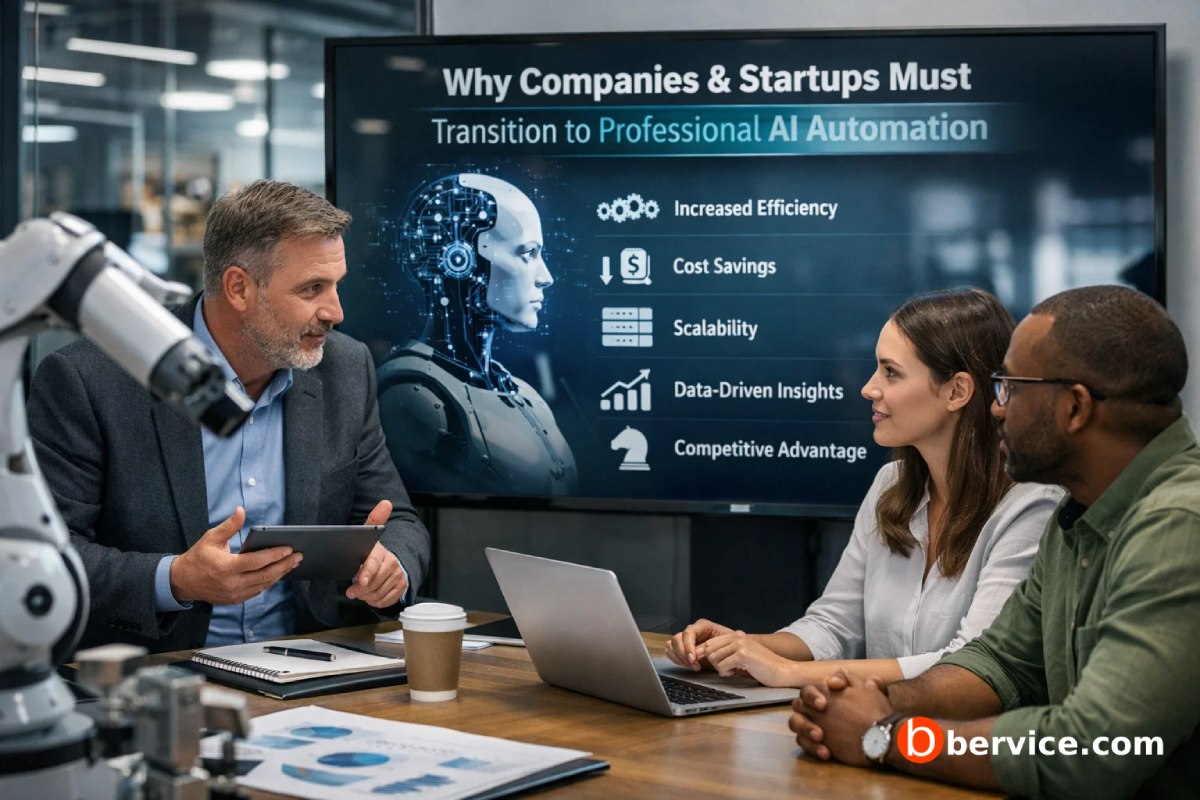
Why Companies and Startups Must Transition to Professional AI Automation
In today’s competitive and fast-moving markets, companies and startups can no longer rely on manual processes, fragmented tools, or purely human-driven decision making. As operations scale, complexity grows non-linearly, and inefficiencies quickly translate into higher costs, slower execution, and strategic blindness. Artificial Intelligence–driven automation is not merely a productivity upgrade; it represents a structural…