-

Building a Safer Future in the Age of Accelerating Technology
1. We Are Building the Future, Whether We Intend to or Not Humanity is actively constructing the future through rapid technological progress. This future is not distant or abstract. It is unfolding in real time, shaped by exponential growth in computing power, connectivity, and automation. Every system we deploy today quietly defines the constraints…
-
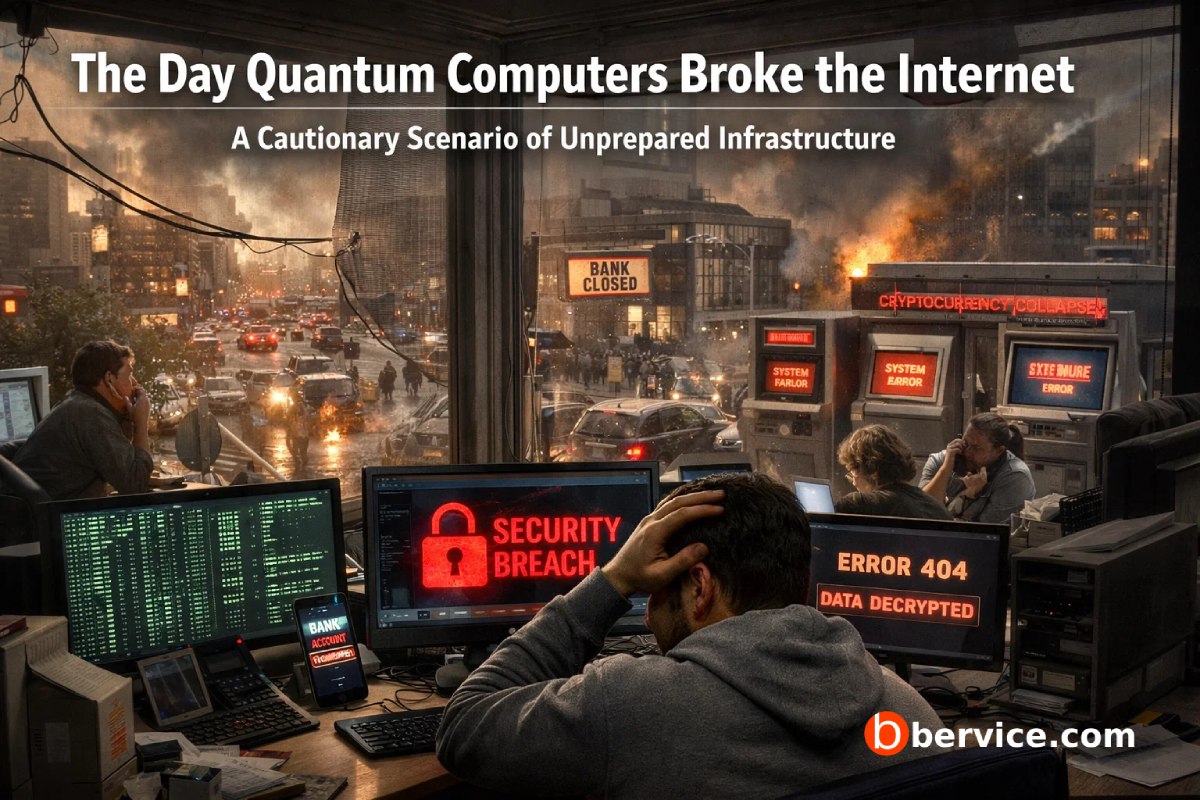
The Day Quantum Computers Broke the Internet
A Cautionary Scenario of Unprepared Infrastructure Prologue: The Morning Nothing Failed The day began quietly. No alarms. No warnings. Banks opened. Hospitals ran. Governments logged in.Every system reported green. Somewhere else, far from public dashboards and compliance reports, the first large scale fault tolerant quantum computer finished a calculation that classical machines would need…
-
What Is NIST? Its Mission and Its Role in the Post-Quantum Cryptography Transition
Introduction As digital systems become more interconnected and long-lived, cryptography has shifted from being a purely technical concern to a matter of national infrastructure and global trust. One organization has played a central role in shaping how cryptography is standardized and adopted worldwide: National Institute of Standards and Technology, commonly known as NIST. In…
-

Are companies ready for post quantum cryptography in 2026
In early 2026, many organizations are aware of post quantum cryptography, but most are not fully transitioned. The common situation is: planning has started, pilots are happening, and inventories are being built, while broad production rollout is still limited to specific parts of the stack like web traffic at large CDNs or selected cloud…
-
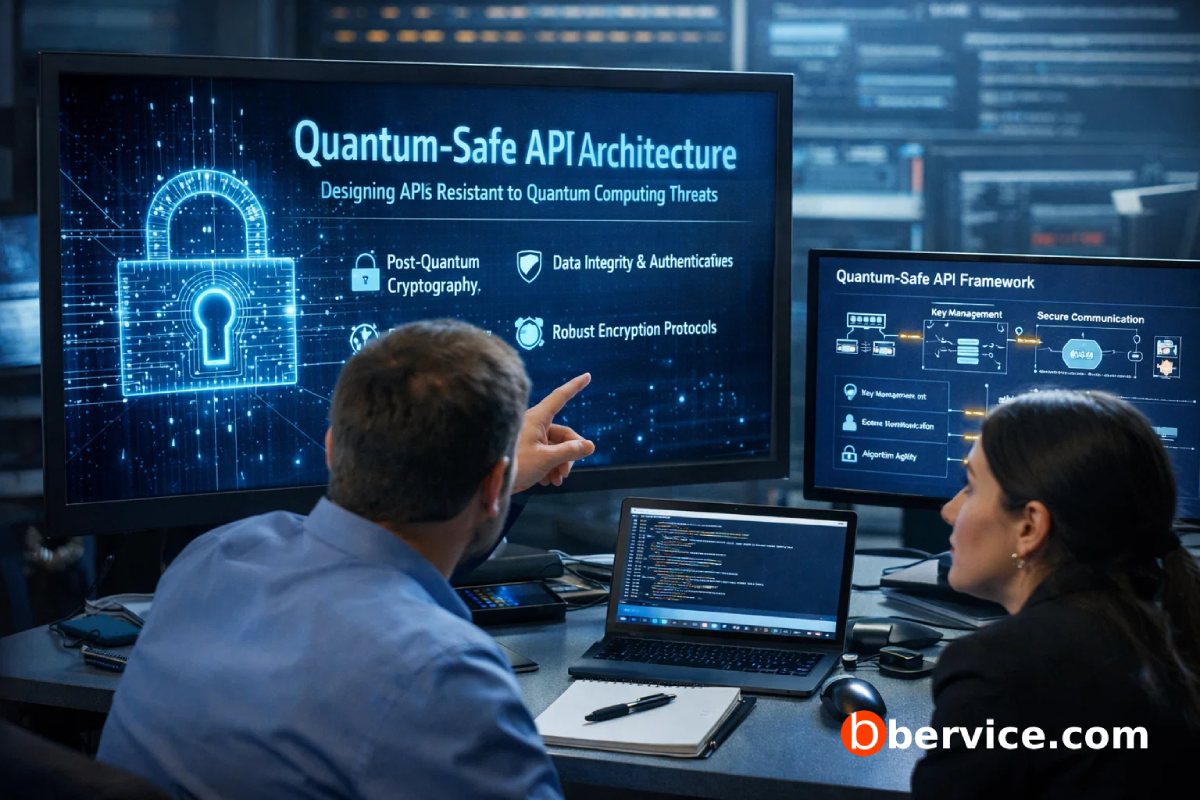
Quantum-Safe API Architecture Designing APIs Resistant to Quantum Computing Threats
Introduction: Why Quantum-Safe APIs Matter The rapid progress of quantum computing represents a structural threat to today’s digital security. Most modern APIs rely directly or indirectly on classical public-key cryptography such as RSA and Elliptic Curve Cryptography (ECC). These systems are secure against classical computers but become fundamentally vulnerable once sufficiently powerful quantum computers…