-
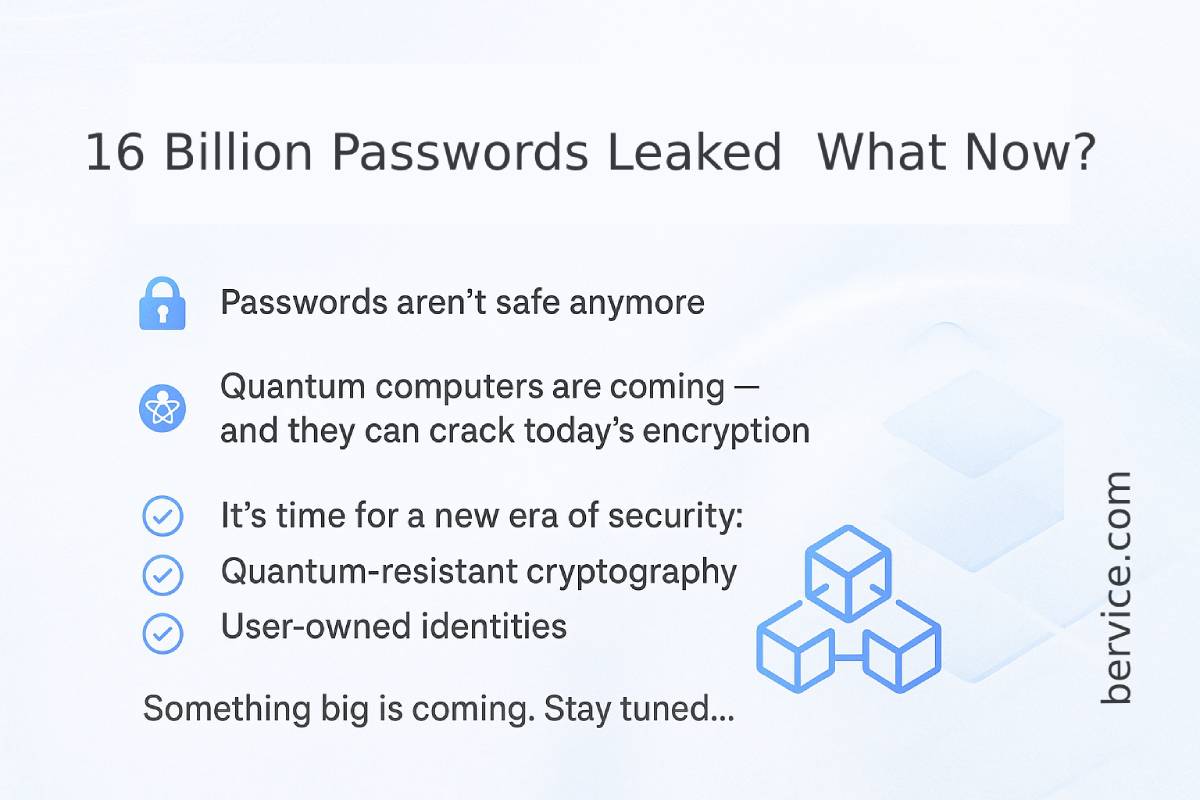
Post-Data Breach Era: Why Quantum Tools and Blockchain Are the Future of Cybersecurity
Introduction: A Wake-Up Call for the Digital WorldIn a recent and alarming cybersecurity breach, over 16 billion user credentials—including passwords from global tech giants like Google, Facebook, and Apple—were compromised. This colossal data leak is a stark reminder that conventional methods of securing digital information are no longer sufficient. Traditional encryption models, reliant on…
-
Embracing a New Era of Security with PQC and Quantum Internet
As the world steps into the quantum age, the traditional foundations of cybersecurity are being challenged. The emergence of powerful quantum computers and quantum communication systems presents both unprecedented risks and revolutionary opportunities. Two core technologies are at the heart of this transformation: Post-Quantum Cryptography (PQC) and the Quantum Internet. Together, they form the…
-

Blockchain-Powered Quality Assurance: Unlocking Trust and Transparency in Modern Supply Chains
In an era where consumer expectations are rising and regulatory standards are tightening, Quality Assurance (QA) has become a mission-critical process across industries. However, traditional QA methods often suffer from issues such as lack of transparency, data manipulation, manual errors, and difficulty in tracing accountability. Blockchain technology, known for its decentralized, tamper-proof nature, is…
-
2026: The Year of Infrastructure Transition and Post-Quantum Cryptography (PQC) Security
As the horizon of quantum computing draws nearer, the year 2026 marks a pivotal moment in the cybersecurity and digital infrastructure landscape. Global enterprises, governments, and tech platforms are no longer just theorizing about quantum threats — they are actively transitioning their infrastructure to prepare for the post-quantum era. Post-Quantum Cryptography (PQC) is no…
-
Securing Web2 Infrastructure Against Quantum Computer Threats
The Strategic Benefits of Adopting Post-Quantum Cryptography (PQC) Introduction: the looming “Q-Day.”Quantum computers are progressing toward the point where they can factor large integers and solve discrete-log problems fast enough to break today’s RSA and ECC keys in minutes. Industry observers now place practical quantum attacks inside the current decade—Google’s Quantum AI group even…