-

How AGI Could Communicate with Ordinary LLMs: Protocols, Architectures, and the Future of Agent Interoperability
Introduction: AGI Will Not Live Alone If Artificial General Intelligence ever becomes a practical system, it will not operate as one isolated “super model.” More realistically, AGI will act as an orchestration layer that can reason, plan, delegate, verify, and coordinate many smaller models, tools, agents, databases, applications, and human workflows. In that future,…
-

How to Improve Information Security When Using Cloud-Based LLMs: Organizational and Business Strategies
1. Introduction: Cloud LLMs Are Powerful, but They Change the Security Model Cloud-based Large Language Models are becoming part of daily business operations. Companies use them for customer support, software development, document analysis, legal review, marketing, HR, finance, research, and decision-making. The value is clear: faster workflows, better automation, lower operational costs, and access…
-

Designing a Standard and Secure Framework for Startups to Adopt AI and LLMs Locally or in the Cloud
Introduction: AI Adoption Needs More Than Excitement Artificial intelligence is quickly becoming a core part of modern business infrastructure. Startups are using AI to automate support, analyze documents, generate code, summarize meetings, improve sales workflows, assist decision-making, and personalize customer experiences. Large Language Models, or LLMs, are especially powerful because they can understand language,…
-

Data Security When Sending Information to LLMs and Cloud AI Systems
Introduction: The New Data Security Challenge Large Language Models and cloud-based AI systems are becoming part of daily business operations. Companies now use AI to summarize documents, write emails, analyze code, process customer messages, generate reports, search internal knowledge, and support decision-making. This creates a powerful productivity advantage, but it also introduces a serious…
-
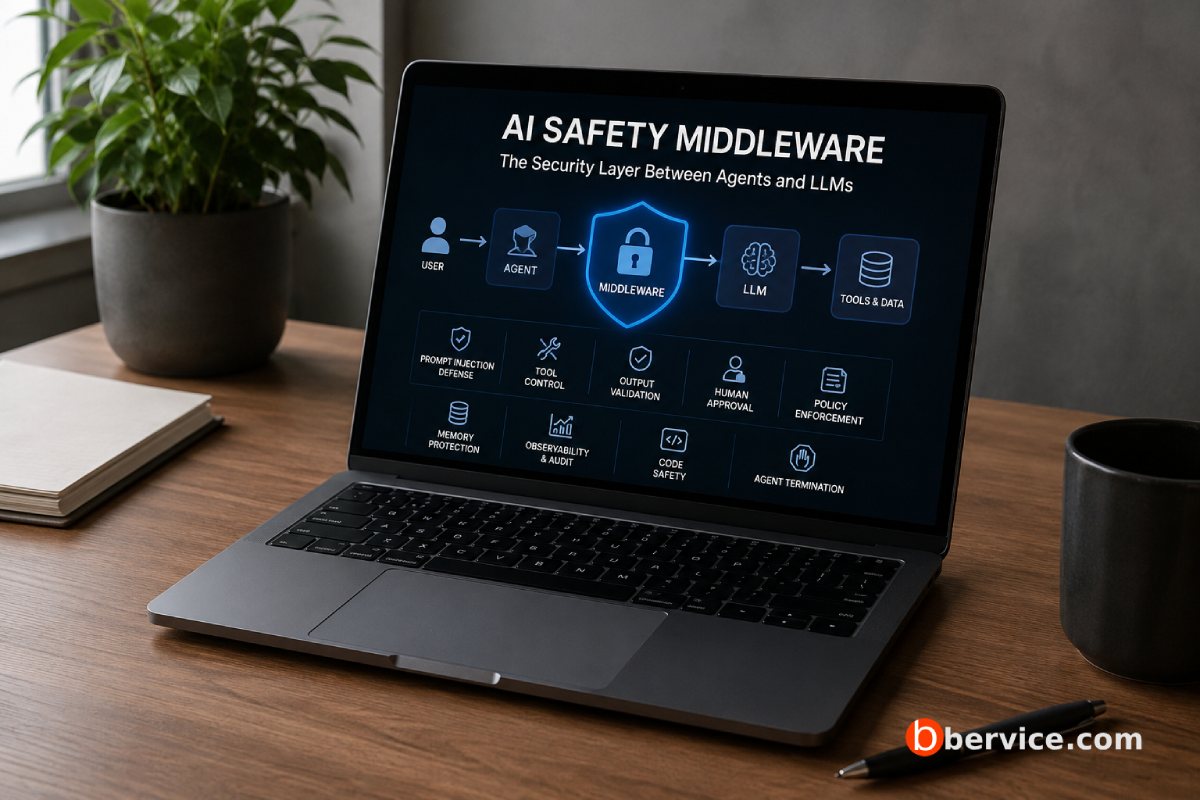
The Rise of AI Safety Middleware: The Security Layer Between Agents and LLMs
Introduction: Why AI Needs a Middle Layer Artificial intelligence is moving from simple chatbots to autonomous agents. A chatbot mostly responds to questions. An AI agent can read files, call APIs, send emails, update databases, write code, browse tools, trigger workflows, and make decisions across multiple systems. This shift creates a new security problem.…