-

Multi-Tenancy as the Engine of Infrastructure Cost Reduction
Modern digital services are built on a simple economic reality: software is cheap to copy, but infrastructure is expensive to run. Every serious SaaS platform in the world survives by optimizing how compute power, storage, and network capacity are consumed across many users. Multi-Tenancy is the architectural answer to that pressure. Instead of deploying…
-

The Power of Hashing in One-Way Security and Irreversible Storage
In modern digital systems, hashing is one of the most fundamental building blocks of security. It is not encryption, it is not obfuscation, and it is not reversible. Hashing exists for a single purpose: to represent data in a way that cannot be transformed back into its original form. This one way property is…
-

Preparing Systems for the Transition to Post-Quantum Cryptography (PQC)
How to Migrate Safely and Stay Ahead of Quantum Attacks Quantum computing is not a distant academic fantasy anymore. The moment a sufficiently powerful quantum computer becomes available, a large portion of today’s cryptographic infrastructure will collapse overnight. If your systems are not prepared before that moment, no patch, hotfix, or emergency migration will…
-

When Encryption Depends on Errors, Not Data
A Critical Look at Noise-Based Security in Quantum-Safe Cryptography Introduction: Security Built on Uncertainty Quantum-safe cryptography was designed to survive a future where quantum computers break today’s public-key systems. To achieve this, many post-quantum schemes rely not on number-theoretic hardness, but on structured randomness, often referred to as noise.At first glance, this sounds elegant:…
-
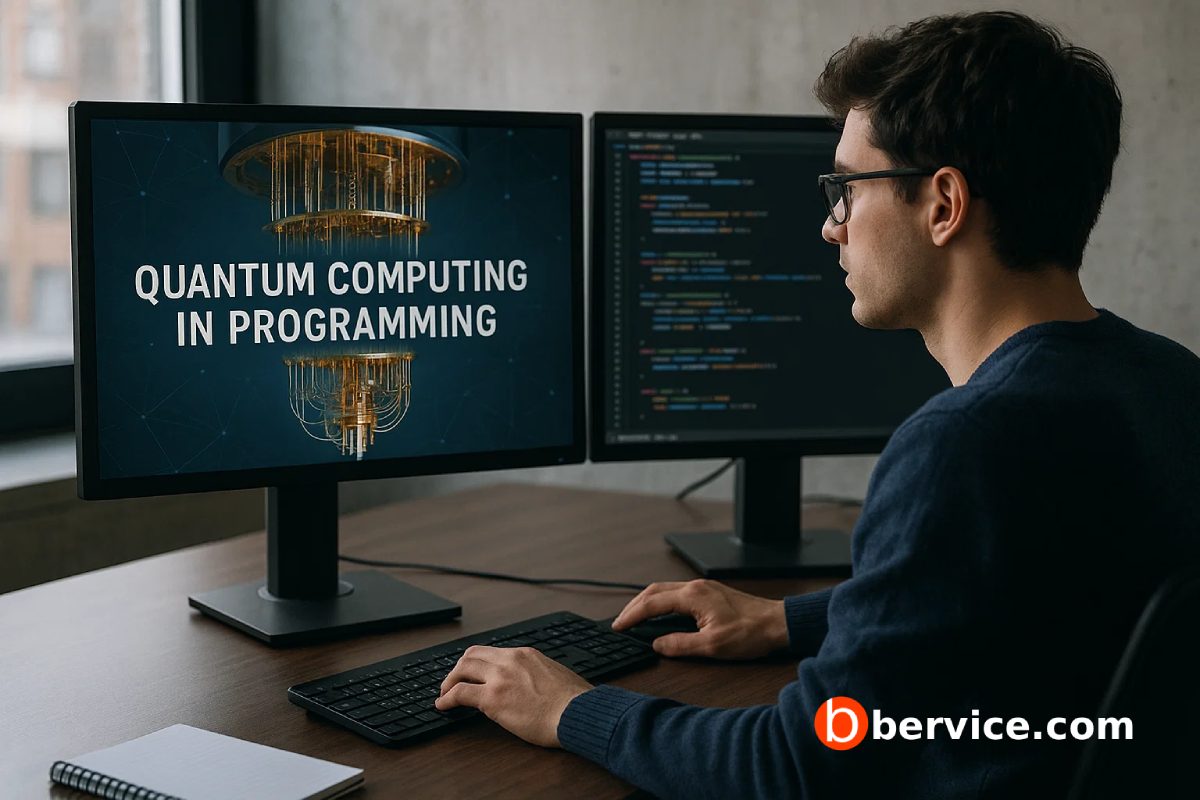
Quantum Computing in Programming: The Shift Toward a New Computational Paradigm
Quantum computing isn’t a “future trend” anymore; it’s a structural shift in how we will write software, design algorithms, and think about computation itself. As quantum hardware slowly crosses the boundary from lab prototypes to early commercial machines, programmers are being pushed toward a new mindset one where uncertainty, superposition, and probabilistic outcomes are…