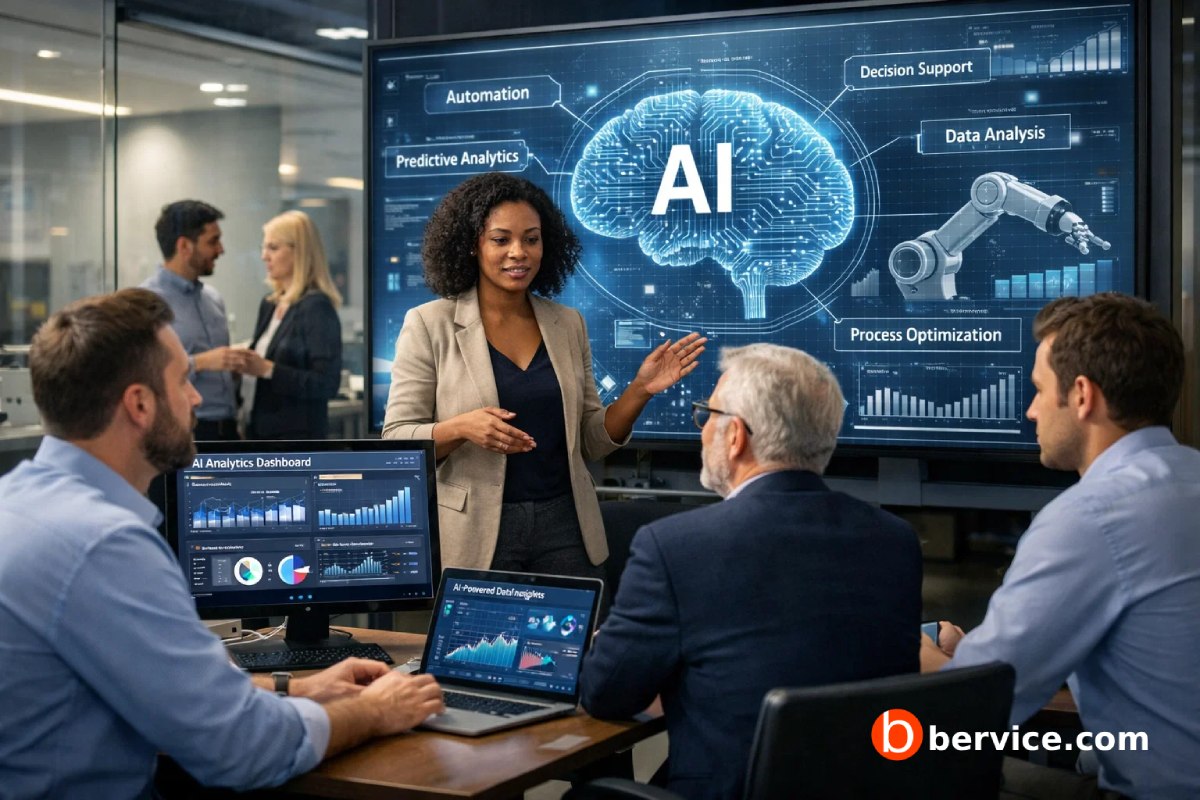
Reducing Cost, Saving Time, and Regaining Control
The hidden problem inside modern businesses
One of the most common problems in startups and growing businesses is not a lack of talent or ideas, but a lack of control. Teams rely on dozens of tools every day: email, project management, chat apps, CRM systems, analytics dashboards, code repositories, calendars, finance tools, and more. Each tool solves a specific problem, but together they create fragmentation.
Information becomes scattered. Decisions are delayed because data lives in different places. Managers spend time asking for reports instead of acting on insights. Employees waste hours switching between tools, copying data, and repeating the same explanations in different systems. Over time, this tool chaos quietly increases costs and slows everything down.
This is not a technology problem. It is a structural problem.
Why traditional automation is not enough
Many companies try to solve this by adding automation. They connect tools with scripts or workflow builders. While this helps, it often creates another layer of complexity. Automations are usually rule based and fragile. When processes change, automations break. When teams grow, the logic no longer scales.
Traditional automation follows instructions. It does not understand context. It cannot explain why something happened, detect weak signals, or adapt to new patterns. This is where artificial intelligence changes the game.
AI as the nervous system of a company
When AI is placed inside the core structure of a company, it stops being a feature and starts acting like a nervous system. Instead of tools working in isolation, AI observes how data flows across the organization.
AI can read emails, tasks, documents, code activity, meetings, and internal messages. It does not just store information. It connects it. This allows the company to move from reactive management to real time awareness.
For example, AI can detect when projects are consistently delayed and link that delay to unclear requirements, overloaded team members, or unrealistic timelines. It can highlight duplicated work across teams. It can show where decision bottlenecks happen and who is waiting on whom.
This level of visibility is almost impossible to achieve manually.
Direct impact on time
Time loss in companies is rarely visible on invoices, but it is everywhere. Meetings without clear outcomes. Long email threads. Repeated status updates. Searching for information that already exists.
AI reduces time waste by acting as a continuous analyst. It summarizes meetings automatically. It creates clear action items. It answers internal questions instantly by searching across company knowledge. It flags issues early, before they turn into delays.
Instead of asking, What is the status of this project, leaders can ask, What is blocking progress right now, and get a precise answer.
Direct impact on cost
Cost reduction does not only mean cutting budgets. It means using resources better. AI helps companies understand where money leaks quietly.
It can identify tools that are underused or duplicated. It can reveal roles that are overloaded while others are underutilized. It can detect inefficient processes that require too many human hours for simple outcomes.
AI also improves decision quality. Better decisions reduce costly mistakes, failed projects, and wasted development cycles. Over time, this has a stronger financial impact than most short term cost cutting strategies.
From control to confidence
When companies lack control over their tools and data, leadership decisions are based on assumptions. When AI provides a clear, connected view of reality, decisions are based on evidence.
This creates confidence at every level. Founders understand the true health of the business. Managers focus on outcomes instead of micromanagement. Teams spend more time creating value and less time reporting on it.
AI does not replace people. It removes noise. It gives humans back their time and attention.
The future structure of companies
In the future, successful companies will not be defined by how many tools they use, but by how well those tools are understood and coordinated. AI will sit quietly in the background, observing, learning, and supporting every layer of the organization.
The real competitive advantage will not be speed alone, but clarity. Companies that see themselves clearly can move faster, spend smarter, and adapt earlier.
For startups and growing businesses, AI is no longer a luxury. It is becoming the missing layer that turns chaos into structure and effort into progress.
Connect with us : https://linktr.ee/bervice
Website : https://bervice.com