1. The Strategic Crossroads for HR
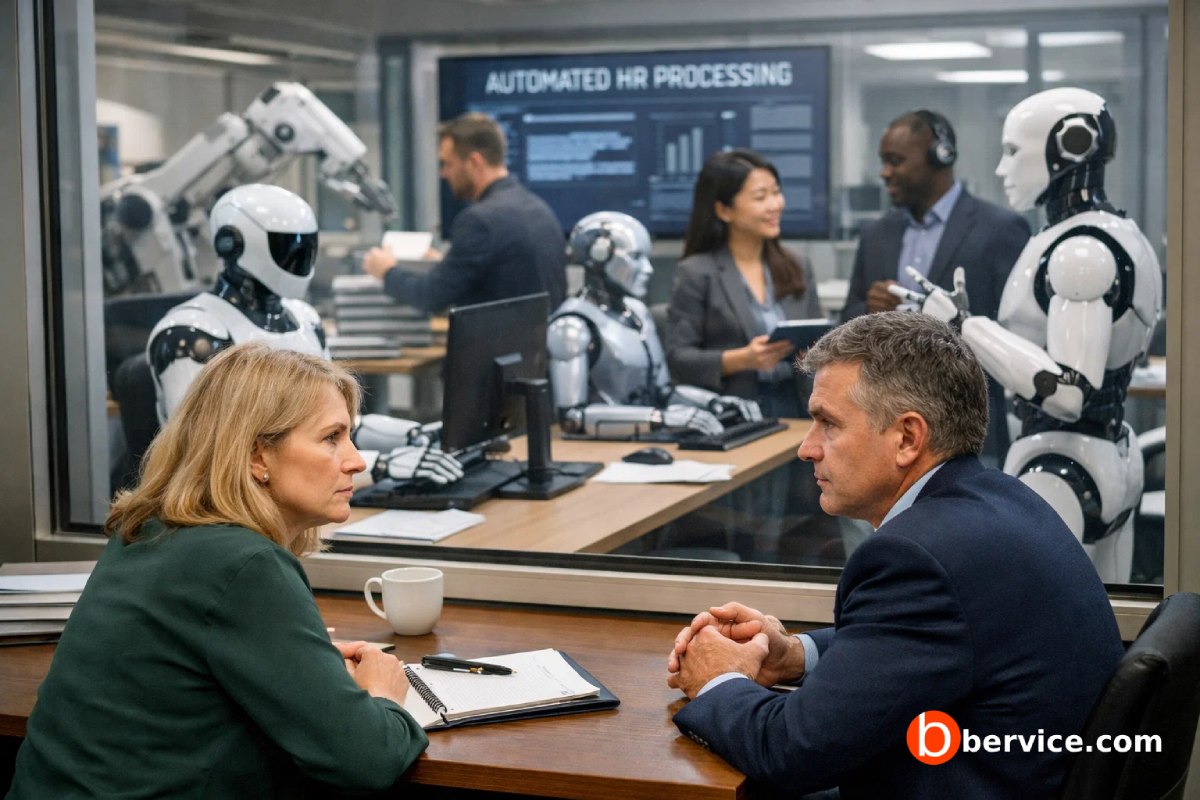
Artificial intelligence is no longer a peripheral innovation. It is becoming the structural backbone of modern organizations. From finance to operations, departments are redesigning their processes around automation and intelligent systems. In this context, Human Resources stands at a strategic crossroads. If HR does not take ownership of organizational automation, it risks becoming operationally irrelevant rather than strategically influential.
2. The Limits of Traditional Reporting Systems
For decades, HR has relied on static reports, quarterly reviews, and manually generated KPIs. These mechanisms were designed for slower economic cycles and more stable organizational structures. Today’s environment is dynamic, data intensive, and continuously shifting. Traditional reporting models cannot keep pace with real time business demands. When HR remains anchored in retrospective reporting, it weakens its strategic value.
3. AI as the New Workforce Infrastructure
AI driven systems are already reshaping workforce management. Predictive analytics can identify turnover risks before resignations occur. Automated skill mapping can reveal competency gaps across entire organizations. Recruitment algorithms can improve candidate matching accuracy. These capabilities transform HR from a reactive department into a proactive strategic partner. Ignoring these tools does not slow their adoption. It only shifts control elsewhere.
4. Ownership of Automation: Lead or Be Replaced
The critical issue is governance. If HR does not design and supervise automation frameworks, other departments or external vendors will define them. Hiring criteria, performance evaluation models, and workforce analytics systems may be shaped without deep human capital expertise. Leadership in automation ensures that technology aligns with organizational values, ethics, and long term strategy.
5. From Periodic Evaluation to Continuous Intelligence
Legacy HR systems assume performance is measured at intervals. Modern AI enabled systems assume performance is continuously observable and analyzable. Real time dashboards, behavioral analytics, and integrated workflow tracking are becoming standard. HR must transition from periodic assessment models to continuous intelligence systems if it wants to remain aligned with operational reality.
6. The Evolving Role of the HR Professional
Automation does not eliminate HR. It transforms it. Administrative processing and repetitive documentation can be automated, freeing professionals to focus on culture architecture, leadership development, and organizational design. The future HR leader must understand data literacy, algorithmic bias, ethical AI governance, and digital system integration. The role becomes more strategic, not less.
7. Competitive Advantage Through Intelligent Talent Systems
Companies that integrate AI into their talent infrastructure gain measurable advantages. They hire faster, train smarter, and allocate human capital more efficiently. Organizations that cling to fragmented manual systems face slower decisions and higher structural inefficiencies. HR can either become a driver of competitive differentiation or an internal bottleneck.
8. Ethical Responsibility in an Automated Era
As automation expands, ethical oversight becomes critical. Algorithmic decision making can introduce bias if not properly supervised. Data privacy and transparency must be actively managed. HR is uniquely positioned to act as the ethical guardian of workforce automation. Leading the transition ensures both technological advancement and human centered governance.
9. The Window of Opportunity
This transformation is still within HR’s control. Departments can audit existing processes, identify automation opportunities, implement AI responsibly, and redesign reporting frameworks for real time insight. Waiting for external pressure reduces strategic influence. Acting early strengthens organizational authority and long term relevance.
10. Technology Moves Forward With or Without You
Organizations evolve with technology. Departments that align with technological acceleration expand their influence. Those that resist gradually lose strategic importance. The future of HR depends not on whether AI grows, but on whether HR chooses to lead its integration. The decision remains internal. The consequences will be structural.
Connect with us : https://linktr.ee/bervice
Website : https://bervice.com