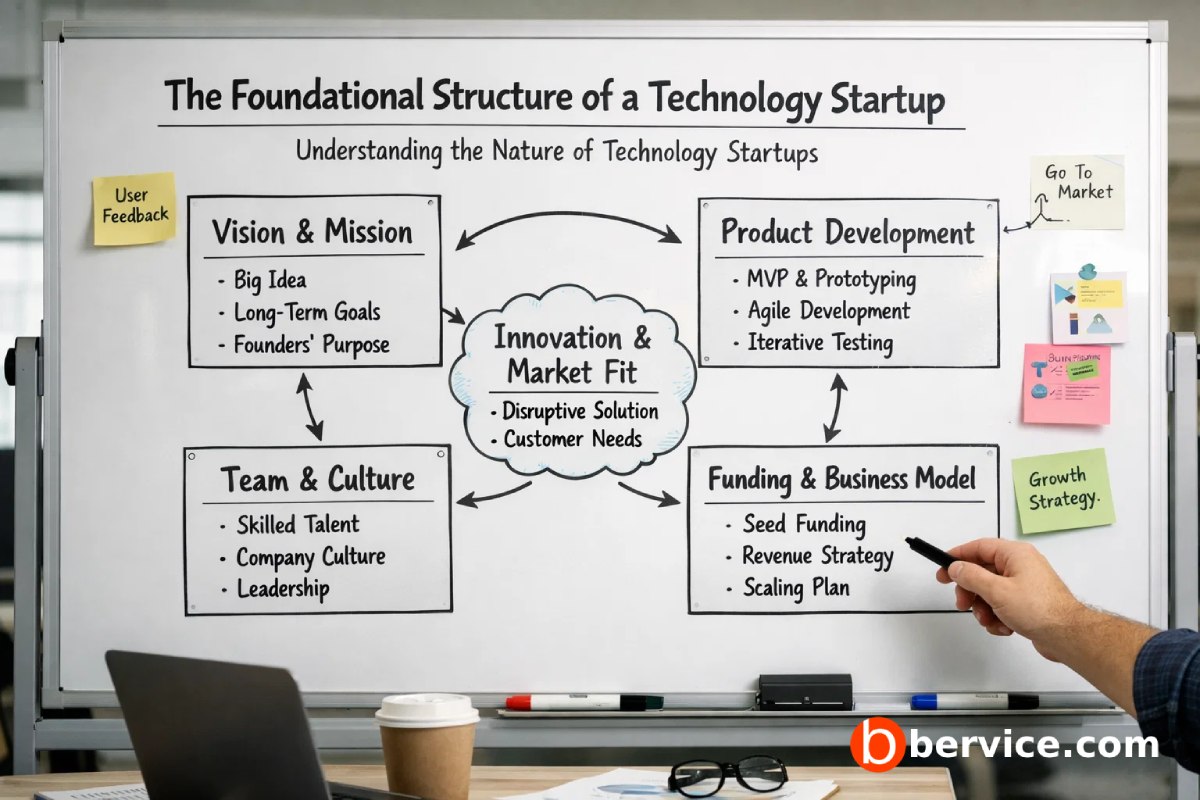
Understanding the Nature of Technology Startups
Technology startups operate in environments defined by rapid innovation, high uncertainty, and intense competition. Unlike traditional businesses that may rely on predictable markets and stable demand, tech startups must often build products for problems that are still evolving. Because of this, the initial structure of a startup becomes critically important. A well-designed structure allows the team to move quickly, experiment effectively, and adapt to new information without losing strategic direction. The goal of early structure is not bureaucracy but clarity in decision-making, ownership, and execution.
Defining the Core Problem and Value Proposition
Every strong technology startup begins with a clearly defined problem. The founding team must understand who the users are, what difficulty those users experience, and why existing solutions are insufficient. The value proposition should explain how the startup solves this problem in a way that is faster, cheaper, more efficient, or fundamentally different from alternatives. Without this clarity, technical development can become directionless, leading teams to build complex systems that do not deliver meaningful value to customers.
Establishing the Founding Team
The founding team is one of the most decisive elements of a startup’s structure. Early-stage technology startups typically require complementary skill sets among founders. A balanced founding team often includes a technical leader responsible for product architecture and development, a business-oriented founder focused on strategy and partnerships, and sometimes a product or design specialist who ensures that the solution aligns with real user needs. Beyond skill diversity, alignment in long-term vision, work ethic, and decision-making style is essential to prevent conflicts that can destabilize the company.
Creating a Lean Organizational Framework
In the early stage, startups benefit from maintaining a lean organizational structure. Instead of multiple management layers, responsibilities should remain clearly defined but flexible. A simple structure often includes product development, operations, marketing, and finance functions. However, these functions are frequently handled by a small group of people wearing multiple roles. The aim is to keep communication direct and reduce delays in decision-making. As the startup grows, the structure can gradually evolve into more specialized teams.
Product Development and Technical Architecture
For a technology startup, the product is the center of the business. Therefore, early structural decisions must prioritize product development. This involves choosing appropriate technology stacks, defining the architecture of the system, and ensuring scalability for future growth. At this stage, many startups focus on developing a Minimum Viable Product (MVP). The MVP is a simplified version of the product that allows the team to test core functionality and validate assumptions with real users. A disciplined approach to MVP development helps prevent overengineering and accelerates learning.
Market Validation and Customer Feedback Loops
A common mistake in early startups is focusing too heavily on building technology without validating whether the market actually wants the solution. A well-structured startup integrates continuous feedback from potential users. This can occur through pilot programs, early adopters, interviews, or limited product releases. Structured feedback loops allow the startup to refine features, improve usability, and identify new opportunities. In many cases, the insights gained during this stage can significantly reshape the product strategy.
Financial Planning and Resource Allocation
Although innovation is the driving force behind technology startups, financial discipline is equally important. Early financial planning typically includes estimating development costs, operational expenses, and runway duration. The concept of runway refers to the amount of time the company can operate before requiring additional funding. Many startups begin with bootstrapping or seed investment from founders and early supporters. Later stages may involve angel investors or venture capital. Maintaining transparent financial tracking helps founders make informed decisions about hiring, marketing, and infrastructure.
Legal and Structural Foundations
Another critical element of startup structure involves establishing the legal and governance framework of the company. This includes selecting the appropriate company registration type, defining ownership distribution among founders, and protecting intellectual property. Technology startups often depend heavily on proprietary software, algorithms, or systems. Ensuring that these assets are legally protected can prevent disputes and strengthen investor confidence in the company’s long-term value.
Building an Adaptive Culture
Startup culture influences how teams respond to challenges and opportunities. A healthy startup culture encourages experimentation, learning from failure, and rapid iteration. Founders should create an environment where team members feel responsible for outcomes and empowered to propose improvements. Transparency in communication and clear mission alignment often lead to stronger collaboration and faster problem solving.
Strategic Partnerships and Ecosystem Integration
Technology startups rarely succeed in isolation. Partnerships with other companies, research institutions, or service providers can accelerate growth and improve credibility. These partnerships may involve technical integrations, distribution channels, or collaborative research. By connecting with the broader ecosystem, startups gain access to knowledge, resources, and market opportunities that would be difficult to build independently.
Preparing for Scalability
While early-stage startups operate with minimal structure, long-term success requires thinking about scalability from the beginning. Systems, processes, and technologies should be chosen with the potential for growth in mind. This includes designing infrastructure that can handle increasing users, implementing data systems that support analytics, and building workflows that can expand as the team grows. Startups that anticipate scaling challenges early often transition more smoothly into later growth stages.
Conclusion
The initial structure of a technology startup plays a crucial role in shaping its trajectory. A well-organized foundation combines clear problem definition, balanced founding teams, lean operational frameworks, disciplined product development, and thoughtful financial planning. By maintaining flexibility while preserving strategic focus, startups can navigate uncertainty and gradually transform innovative ideas into sustainable technology businesses.
Connect with us : https://linktr.ee/bervice
Website : https://bervice.com