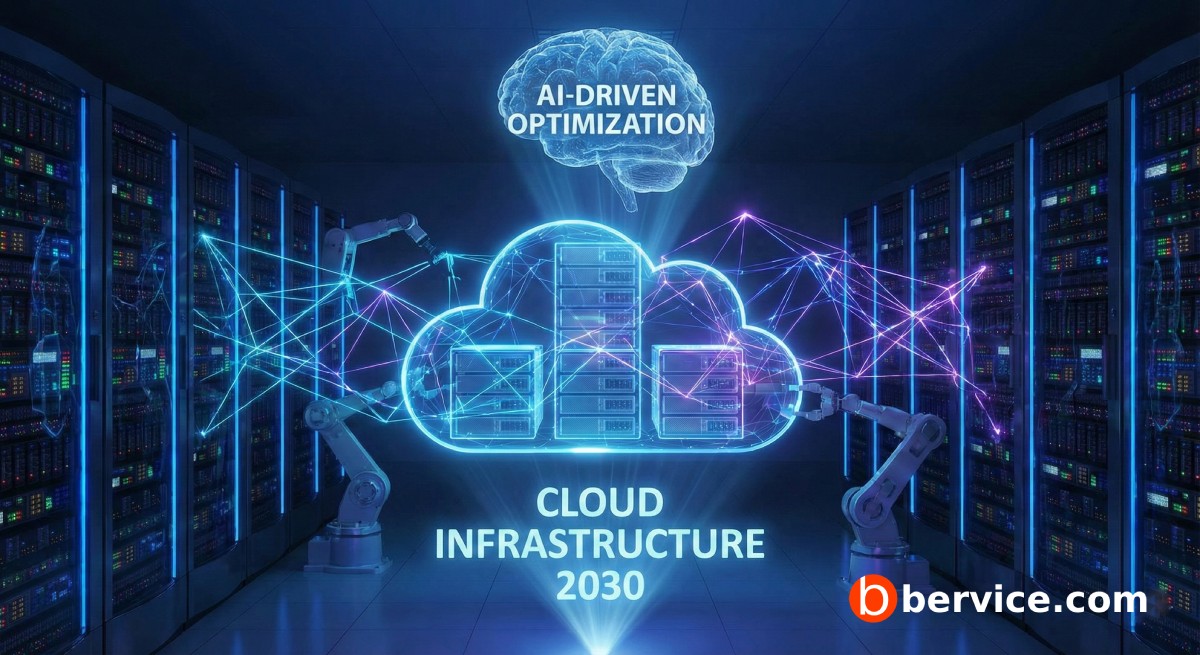
Cloud computing has become the backbone of modern digital services, but its growing scale has introduced a level of complexity that traditional manual management simply cannot handle. As applications scale globally and workloads become increasingly unpredictable, organizations are turning to artificial intelligence (AI) as the new control layer for cloud optimization. AI is not just enhancing cloud operations it is redefining how infrastructure is allocated, monitored, and evolved over time.
Predictive Load Analysis and Intelligent Resource Allocation
One of the biggest weaknesses of traditional cloud management is its reactive nature: systems adjust after a spike or failure occurs. AI flips this model by using predictive algorithms to anticipate workload patterns before they impact performance. Through machine learning models trained on historical consumption, traffic surges, user behavior, and seasonal patterns, cloud platforms can forecast CPU, memory, and network demands with remarkable accuracy.
This predictive capability enables dynamic resource scaling, where AI automatically provisions additional compute instances or releases unused resources in real time. The result is a cloud environment that stays stable under pressure, avoids over-provisioning, and dramatically cuts unnecessary infrastructure costs.
Self-Optimizing Infrastructure Through Continuous Learning
Machine learning brings adaptability to cloud systems. Instead of relying on fixed rules defined by engineers, AI continuously observes system performance, identifies inefficiencies, and adjusts configuration parameters autonomously. For example:
- Load balancers can reroute traffic to nodes with optimal latency.
- Storage systems can shift data between hot and cold tiers automatically.
- Databases can tune indexes, caching strategies, and query execution plans based on workload patterns.
This creates a self-optimizing ecosystem where cloud infrastructure becomes more efficient the longer it runs—something impossible with manual administration.
Cost Optimization Through Intelligent Consumption Modelling
For many organizations, cloud expenses are unpredictable and often out of control. AI introduces transparency and optimization by analyzing factors such as:
- Underutilized instances
- Idle storage
- Redundant services
- Inefficient autoscaling thresholds
- Future cost projections
AI-powered FinOps platforms can recommend precise adjustments or execute them automatically resulting in significant budget reductions without compromising performance. In large-scale cloud deployments, these savings can reach millions annually.
AI-Enhanced Reliability and Incident Prevention
Downtime is expensive, both financially and reputationally. AI improves system resilience by detecting anomalies before they escalate. Instead of waiting for metrics to cross static thresholds, anomaly-detection algorithms evaluate complex behavioral patterns in logs, network traffic, and performance telemetry.
If unusual patterns appear such as memory leaks, creeping latency, or suspicious access attempts AI can trigger alerts, initiate mitigations, or even perform corrective actions like restarting services or isolating affected nodes. This proactive defense drastically reduces outage risks and strengthens the stability of distributed applications.
Autonomous Cloud Operations (AIOps): The Next Era
AIOps is emerging as the dominant approach for managing cloud complexity. It integrates:
- Automated monitoring
- Intelligent alert reduction
- Predictive maintenance
- Log and metric correlation
- Root-cause analysis
By merging observability with AI, AIOps reduces noise, accelerates troubleshooting, and allows teams to focus on innovation rather than firefighting operational issues.
Why AI + Cloud Is Becoming the Future of Software Architecture
As industries adopt microservices, serverless functions, edge computing, and multi-cloud deployments, the architecture becomes too complex for humans to manually manage. AI introduces capabilities that match this complexity: adaptability, prediction, automation, and resilience. The convergence of AI and cloud is leading to infrastructures that can:
- Scale autonomously
- Heal themselves
- Optimize cost without human intervention
- Deliver consistent performance under volatile workloads
- Reduce operational burdens on engineering teams
In essence, AI is transforming cloud systems into intelligent platforms that manage themselves.
Connect with us : https://linktr.ee/bervice
Website : https://bervice.com