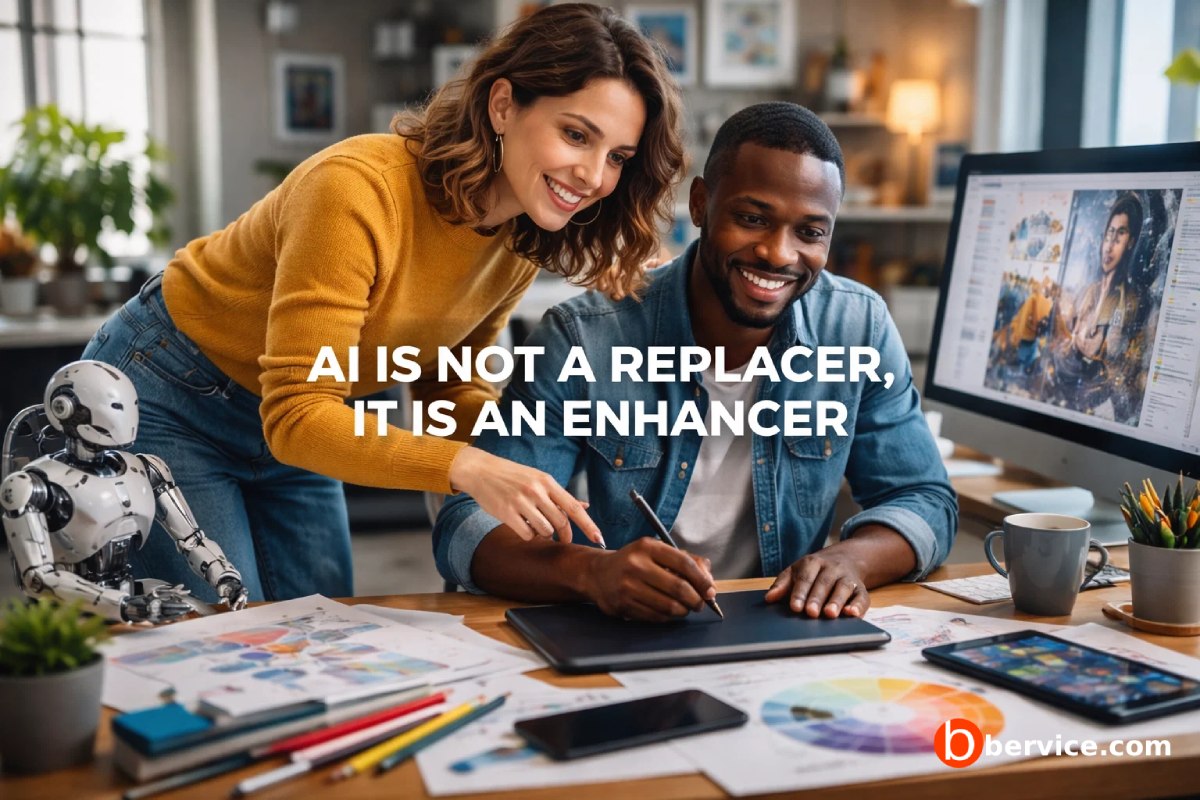
Introduction: The Wrong Fear About Artificial Intelligence
Artificial intelligence is often presented as a force that replaces humans, removes jobs, and takes control of company operations. This view is incomplete and, in many cases, misleading. AI is not valuable because it simply replaces people. Its real value lies in its ability to improve systems, strengthen processes, reduce inefficiency, and expose weaknesses that were already present. In this sense, AI should not be seen as a destroyer of human work, but as a powerful enhancer of organizational performance.
AI as a Tool for Optimization
At its core, artificial intelligence is an instrument of optimization. It can analyze large volumes of data, identify patterns, detect inconsistencies, and recommend better ways of working. This makes it especially useful inside companies where many tasks, decisions, and workflows are often slowed down by outdated habits, weak structures, or human error. AI does not create inefficiency. It reveals it. It does not invent dysfunction. It makes dysfunction visible and harder to ignore.
Why Companies Need AI as an Internal Improvement Engine
In modern companies, especially those growing quickly, internal mechanisms often become messy over time. Communication breaks down, responsibilities become unclear, repetitive tasks consume valuable energy, and bad decisions accumulate. AI can help companies clean these mechanisms by introducing clarity, speed, and consistency. It can support better hiring decisions, improve project management, strengthen customer service, and make internal reporting more accurate. When used correctly, AI becomes an internal improvement engine that continuously pushes the company toward better performance.
Startups Benefit the Most from AI
Startups operate in an environment where speed matters, resources are limited, and mistakes are expensive. Unlike large corporations, startups usually do not have the luxury of carrying inefficiency for long periods of time. A weak process, an unproductive role, or a poor decision can damage the entire company. This is why AI is especially important in startups. It helps founders and teams identify what is working, what is failing, and what should be redesigned before the damage becomes permanent. In a startup, AI is not merely a convenience. It can become a survival tool.
AI Does Not Remove Value, It Measures It
One of the most important effects of AI inside organizations is that it makes value measurable. Many companies are filled with activities that look useful but do not create real progress. Some meetings waste time. Some roles produce little output. Some workflows exist only because they were never questioned. AI has the power to evaluate output, compare performance, and reveal whether a person, process, or system is genuinely contributing to the company’s goals. What disappears in this environment is not humanity. What disappears is hidden inefficiency.
The Real Target Is Defect, Not People
It is important to make a critical distinction here. AI is not designed to eliminate people. It is designed to eliminate defects. Those defects may exist in processes, in structures, in communication flows, in management styles, or in human performance. If a company discovers through AI that a certain process is broken, that process will likely be removed or rebuilt. If it discovers that a certain role adds no meaningful value, that role may change or disappear. If it finds that an employee consistently weakens the system instead of strengthening it, then that problem will also be addressed. In all of these cases, AI is not acting as the executioner. It is acting as the mirror.
When Weak Employees Are Exposed
A difficult but necessary truth is that AI can make poor performance much harder to hide. In many companies, some employees survive not because they create value, but because systems are too weak to measure real contribution. AI changes that. It can highlight productivity patterns, quality issues, response times, accountability gaps, and repeated operational failures. This does not mean AI is anti human. It means AI increases transparency. Employees who are effective, adaptable, and responsible become more valuable in an AI supported environment. Employees who are careless, resistant, or consistently harmful to performance become more visible.
High Performers Become Even Stronger
The same system that exposes weak performance also empowers strong performance. AI helps capable employees work faster, think more clearly, automate repetitive tasks, and spend more time on meaningful work. Instead of replacing top performers, AI amplifies them. It increases their leverage. A great marketer becomes stronger with better data analysis. A great engineer becomes faster with intelligent tooling. A great operator becomes more effective with predictive insights. AI rewards capability because it removes friction from execution.
Leadership Must Use AI Wisely
The impact of AI in a company depends heavily on leadership. If leaders use AI only to reduce headcount without improving systems, they will miss its true value. If they use it only as a fashionable tool without redesigning broken workflows, results will remain shallow. Strong leaders understand that AI should first be applied to improve the organization itself. It should be used to clarify priorities, detect waste, strengthen accountability, and increase the quality of decision making. The goal is not simple automation. The goal is intelligent transformation.
AI and the End of Tolerated Dysfunction
For years, many companies have tolerated dysfunction because they lacked visibility. Poor management, redundant reporting, weak hiring, delayed execution, and low accountability were often accepted as normal. AI reduces the ability of organizations to hide behind confusion. Once patterns are visible, excuses become less powerful. Once inefficiencies are measurable, tolerance for them begins to decline. This is why AI feels threatening to some environments. It threatens not people by nature, but tolerated disorder.
The Ethical Responsibility of Using AI
Although AI can improve companies dramatically, it must be used responsibly. Optimization should not become cruelty. Measurement should not become dehumanization. Leaders must remember that people are not machines, and not every important human contribution can be captured perfectly in data. Judgment, creativity, trust, loyalty, and emotional intelligence still matter deeply. AI should support wise leadership, not replace it. The healthiest companies will be those that combine AI driven improvement with human maturity and ethical responsibility.
The Future Company Will Be More Intelligent and More Demanding
As AI becomes more integrated into business operations, companies will become more intelligent, more data aware, and more demanding. They will expect clearer output, faster learning, stronger adaptability, and better process discipline. This will not necessarily make work less human. In many cases, it will make work more meaningful by removing waste and allowing people to focus on higher value contribution. But it will also make excuses, inefficiency, and low standards increasingly difficult to protect.
AI as a Force for Continuous Improvement
The most accurate way to understand artificial intelligence in business is to see it as a force for continuous improvement. It improves what is strong and exposes what is weak. It accelerates what works and challenges what does not. It creates pressure toward better systems, better people management, better execution, and better outcomes. The organizations that understand this will not fear AI as a replacement machine. They will embrace it as an improvement system.
Conclusion: AI Does Not Eliminate, It Optimizes
Artificial intelligence is not, by itself, a remover of people or a destroyer of jobs. It is a tool that optimizes reality. In that optimization process, anything defective becomes vulnerable, whether it is a broken workflow, an outdated structure, a bad decision pattern, or an employee who consistently weakens the company. This is why AI feels disruptive. But the disruption is not caused by AI alone. It is caused by the exposure of what should have been fixed long ago. In the end, AI is not the one that removes value. It is the one that reveals where value truly exists.
Connect with us : https://linktr.ee/bervice
Website : https://bervice.com