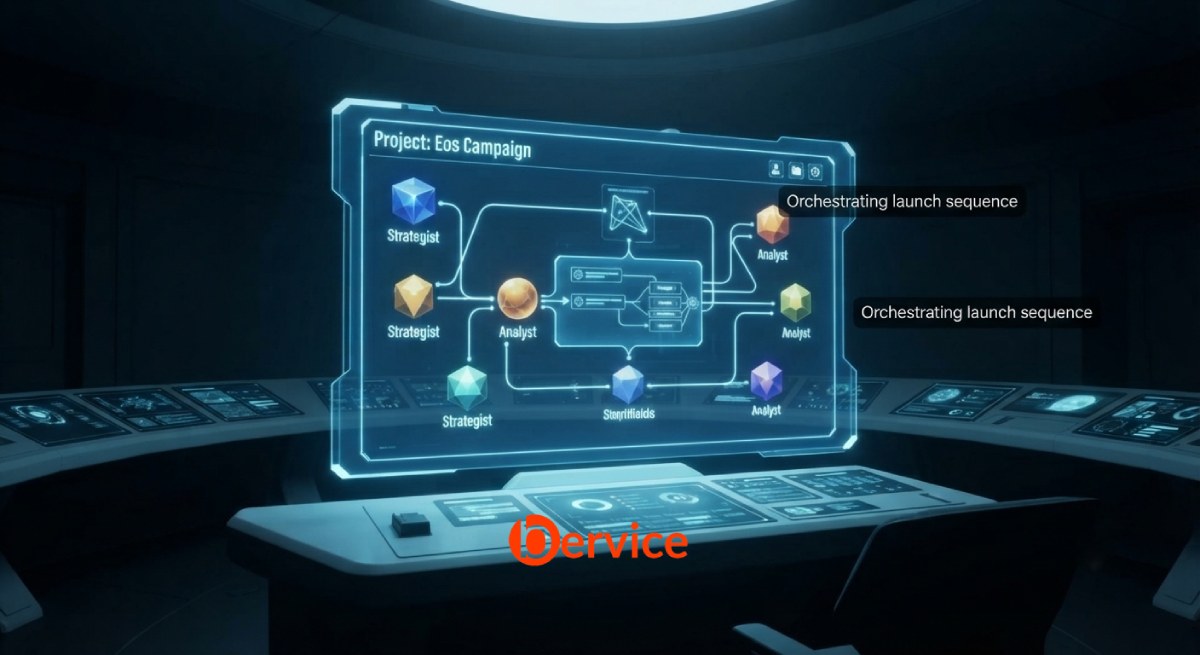
Designing AI Teams for Sales, Customer Support, Software Development, and Project Management
Introduction: AI Is Evolving from Individual Tools to Collaborative Teams
For the past few years, organizations have focused on building increasingly capable AI assistants. These systems excel at completing individual tasks such as writing emails, generating code, analyzing spreadsheets, or answering customer questions.
However, the next major leap in artificial intelligence is not simply creating smarter individual agents. It is enabling multiple specialized AI agents to work together as coordinated teams, much like departments inside a successful company.
Instead of relying on one general-purpose AI to handle everything, businesses are beginning to build ecosystems where dozens of autonomous agents communicate, delegate work, review each other’s output, and collectively solve complex business problems.
This shift represents one of the most important architectural changes in enterprise AI.
Why One AI Agent Isn’t Enough
Imagine asking a single employee to:
- Close sales
- Handle customer support
- Write software
- Design marketing campaigns
- Manage projects
- Analyze financial reports
- Recruit new employees
No business would expect one person to master every role.
The same principle applies to AI.
General-purpose agents become overwhelmed when responsibilities grow. Context becomes cluttered, reasoning quality declines, and decision-making becomes inconsistent.
Specialization dramatically improves performance.
Instead of one overloaded assistant, companies are now designing AI organizations, where each agent has a clearly defined expertise.
The Multi-Agent Architecture
A collaborative AI system typically consists of several layers.
Executive Agent
Acts as the coordinator.
Responsibilities include:
- Understanding business objectives
- Breaking work into smaller tasks
- Assigning tasks to specialized agents
- Monitoring progress
- Combining results
- Resolving conflicts
This agent functions similarly to a CEO or project manager.
Specialized Agents
Each focuses on a single domain.
Examples include:
Sales Agent
- Qualifies leads
- Drafts proposals
- Answers pricing questions
- Predicts closing probability
Customer Support Agent
- Resolves tickets
- Searches documentation
- Escalates unusual cases
- Learns from previous resolutions
Developer Agent
- Writes code
- Reviews pull requests
- Generates tests
- Fixes bugs
- Refactors architecture
Marketing Agent
- Creates campaigns
- Writes content
- Optimizes SEO
- Plans social media
Finance Agent
- Forecasts revenue
- Reviews expenses
- Detects anomalies
- Produces reports
Legal Agent
- Reviews contracts
- Checks compliance
- Flags risks
Instead of competing, these agents cooperate.
How Agents Communicate
Collaboration requires more than simply sharing prompts.
Modern multi-agent systems exchange structured information.
Examples include:
Task requests
Design API endpoint for payment service.
Status updates
Task completed.
Confidence: 96%
Clarification requests
Customer requirement is ambiguous.
Need additional information.
Shared memory
Customer prefers annual subscription.
Risk alerts
Potential security vulnerability detected.
Every agent contributes information that becomes available to others.
This creates a continuously evolving organizational memory.
Example: Sales Team of AI Agents
Imagine a new lead visits a company’s website.
Instead of one chatbot responding, an entire AI sales team becomes active.
Step 1
Lead Qualification Agent
Collects:
- Company size
- Industry
- Budget
- Pain points
- Urgency
Step 2
Research Agent
Searches publicly available information.
Finds:
- Funding history
- Technology stack
- Competitors
- Recent announcements
Step 3
Proposal Agent
Generates a personalized solution.
Includes:
- Pricing
- Timeline
- ROI estimates
- Case studies
Step 4
Negotiation Agent
Handles objections.
Examples:
Budget concerns
Security questions
Integration challenges
Step 5
CRM Agent
Updates Salesforce or HubSpot automatically.
Schedules follow-ups.
Creates reminders.
Logs conversation history.
The customer experiences one smooth interaction.
Behind the scenes, five different AI agents collaborated.
Customer Support with AI Teams
Traditional support chatbots often fail because they rely on static responses.
A collaborative AI support team works differently.
Customer asks:
“Our API suddenly stopped working after yesterday’s update.”
Support Coordinator assigns tasks.
Documentation Agent
Searches technical documentation.
Log Analysis Agent
Examines error logs.
Developer Agent
Reviews recent deployments.
Security Agent
Checks authentication failures.
Knowledge Agent
Searches historical incidents.
Finally, the Response Agent combines all findings into one clear answer.
Instead of a generic reply, the customer receives a diagnosis backed by multiple specialists.
Software Development Teams
Software engineering is one of the most promising areas for multi-agent collaboration.
A typical workflow might look like this.
Product Manager Agent
Creates user stories.
↓
System Architect Agent
Designs architecture.
↓
Backend Agent
Implements APIs.
↓
Frontend Agent
Builds UI.
↓
Database Agent
Designs schema.
↓
Testing Agent
Generates unit tests.
↓
Security Agent
Scans vulnerabilities.
↓
Code Review Agent
Reviews quality.
↓
Deployment Agent
Ships production release.
Every stage becomes partially autonomous.
Human engineers supervise instead of manually executing every task.
AI Project Management
Project management naturally benefits from agent collaboration.
Imagine planning a six-month software project.
Manager Agent
Creates roadmap.
Scheduling Agent
Builds timelines.
Risk Agent
Predicts delays.
Budget Agent
Tracks costs.
Communication Agent
Writes status updates.
Meeting Agent
Summarizes discussions.
Documentation Agent
Maintains project knowledge base.
Instead of one project manager doing everything manually, AI continuously coordinates the project.
Shared Memory Is the Key
Without shared memory, agents repeatedly ask the same questions.
Modern multi-agent systems maintain centralized knowledge.
Examples include:
Customer preferences
Business rules
Company policies
Product documentation
Past conversations
Previous decisions
Project history
Each agent contributes new knowledge while benefiting from existing information.
This dramatically reduces duplication and improves consistency.
Conflict Resolution Between Agents
Agents will sometimes disagree.
Developer Agent:
“This feature should ship.”
Security Agent:
“Critical vulnerability detected.”
Who decides?
Many systems introduce an Evaluation Agent.
Its responsibilities include:
- Comparing evidence
- Measuring confidence
- Requesting additional analysis
- Escalating uncertain cases
- Making final recommendations
This creates an internal peer review process.
Human Oversight Remains Essential
Despite increasing autonomy, businesses should avoid fully unsupervised AI organizations.
Humans remain responsible for:
Strategic decisions
Ethical judgment
Legal accountability
Customer relationships
Risk acceptance
Final approvals
The most successful companies will combine AI speed with human wisdom.
Challenges of Multi-Agent Systems
Although promising, collaborative AI introduces new complexities.
Communication Overhead
Too many messages reduce efficiency.
Context Synchronization
Agents must work with consistent information.
Task Coordination
Poor delegation creates duplicated work.
Cost
Running multiple LLMs increases compute expenses.
Latency
Sequential workflows may become slower.
Trust
Organizations need confidence that agents produce reliable outputs.
These challenges are driving active research into better orchestration frameworks.
The Rise of AI Organizations
Today’s companies have human departments.
Tomorrow’s companies may have AI departments.
Sales Department
Ten specialized AI agents.
Engineering Department
Twenty coding agents.
Customer Success
Fifteen support agents.
Finance
Five analytical agents.
Operations
Workflow coordination agents.
HR
Recruiting and onboarding agents.
Each department collaborates with both humans and other AI teams.
The result is an organization where intelligence is distributed rather than centralized.
The Future: Autonomous Enterprises
As large language models continue to improve, the role of humans will shift from performing routine operational work to directing intelligent systems.
Future enterprises may operate with hundreds of specialized AI agents that communicate continuously, learn from shared knowledge, and coordinate complex workflows with minimal human intervention.
Rather than replacing employees, these agent ecosystems will amplify human capabilities by taking ownership of repetitive, data-intensive, and cross-functional tasks. Professionals will spend more time on creativity, strategic thinking, relationship building, and innovation while AI teams manage execution at scale.
The organizations that thrive will not necessarily be those with the most powerful individual AI model. Instead, competitive advantage will come from designing intelligent, collaborative agent ecosystems where each AI has a clear responsibility, shared context, and the ability to work seamlessly with both humans and other agents.
In the coming decade, businesses may no longer ask, “Which AI model should we use?” Instead, they will ask a far more transformative question:
“How should we design our AI workforce?”
That question will define the next generation of digital transformation, where success depends not on a single intelligent assistant, but on an entire organization of AI agents working together with speed, precision, and purpose.
Connect with us : https://linktr.ee/bervice
Website : https://bervice.com