Introduction
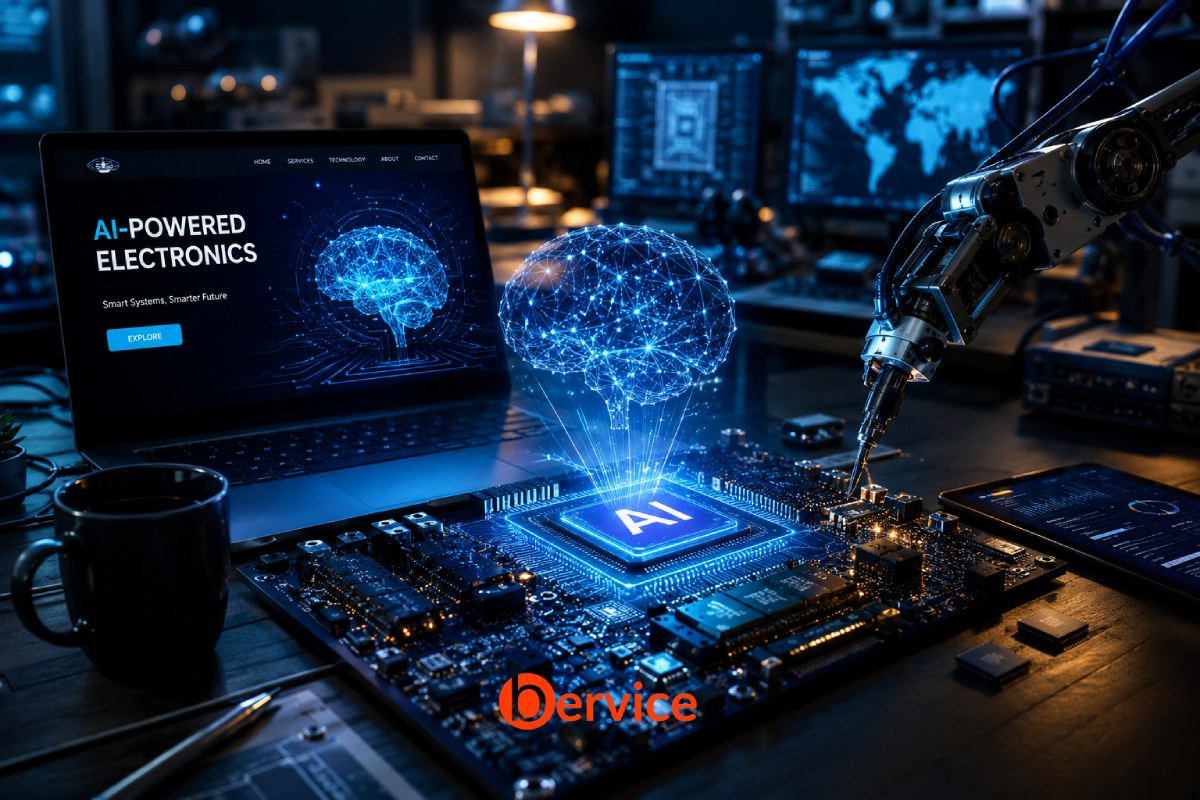
Artificial Intelligence (AI) has become one of the most transformative technologies in modern electronics. From smartphones and wearable devices to industrial automation and autonomous vehicles, AI is fundamentally changing how electronic systems are designed, manufactured, and operated. Instead of simply executing predefined instructions, modern electronic devices can now analyze data, learn from experience, predict outcomes, and make intelligent decisions in real time.
As semiconductor technology advances and specialized AI chips become more powerful and energy efficient, AI is rapidly becoming a standard component of electronic products across almost every industry. While these advancements create enormous opportunities, they also introduce new technical, ethical, and security challenges.
This article explores how AI is reshaping electronics, its major benefits and disadvantages, and the industries where it is currently making the greatest impact.
What Is AI in Electronics?
Artificial Intelligence in electronics refers to the integration of machine learning, neural networks, computer vision, natural language processing, and predictive algorithms into electronic hardware and embedded systems.
Unlike traditional electronic systems that follow fixed programming, AI powered electronics continuously improve their performance by learning from collected data.
Modern AI electronics typically include:
- AI processors (NPU, TPU, Neural Engines)
- Embedded Machine Learning (TinyML)
- Edge AI computing
- Smart sensors
- Computer Vision systems
- Voice recognition hardware
- Predictive control algorithms
These technologies enable electronic devices to become adaptive, autonomous, and highly efficient.
Major Applications of AI in Electronics
1. Consumer Electronics
AI is now integrated into nearly every premium consumer device.
Examples include:
- Smartphones
- Smart TVs
- Smart speakers
- Wireless earbuds
- Smart watches
- Tablets
- Digital cameras
Common AI features include:
- Face recognition
- Voice assistants
- Image enhancement
- Battery optimization
- Adaptive display brightness
- Noise cancellation
- Real time language translation
Modern smartphones perform billions of AI operations every day without requiring cloud processing.
2. Semiconductor and Chip Design
One of the fastest growing uses of AI is inside semiconductor development.
AI helps engineers:
- Optimize chip layouts
- Reduce power consumption
- Detect design errors
- Automate verification
- Improve thermal efficiency
- Shorten development cycles
Major chip manufacturers increasingly use AI to design next generation processors that would be extremely difficult to optimize manually.
3. Electronic Manufacturing
Manufacturing has become one of AI’s biggest success stories.
AI powered factories use:
- Machine vision inspection
- Robotic assembly
- Predictive maintenance
- Production optimization
- Automated quality control
- Supply chain forecasting
Factories can now identify microscopic defects in printed circuit boards (PCBs) faster and more accurately than human inspectors.
4. Robotics
Industrial robots increasingly rely on AI for:
- Object recognition
- Path planning
- Motion optimization
- Human collaboration
- Autonomous navigation
AI enables robots to adapt to changing environments rather than following rigid programmed movements.
5. Automotive Electronics
Modern vehicles contain dozens of AI driven electronic control systems.
Applications include:
- Driver assistance
- Collision avoidance
- Lane keeping
- Parking assistance
- Traffic sign recognition
- Autonomous driving
- Battery management for electric vehicles
AI continuously processes information from cameras, radar, lidar, GPS, and multiple sensors simultaneously.
6. Medical Electronics
Healthcare electronics benefit enormously from AI.
Examples include:
- Portable diagnostic devices
- Medical imaging
- ECG analysis
- Wearable health monitors
- Patient monitoring systems
- Smart prosthetics
AI helps physicians detect diseases earlier while reducing diagnostic errors.
7. Industrial IoT
Smart factories rely heavily on AI connected electronics.
Applications include:
- Sensor monitoring
- Equipment diagnostics
- Energy optimization
- Failure prediction
- Smart maintenance scheduling
Industrial AI reduces downtime while increasing productivity.
8. Smart Homes
Home electronics increasingly use AI to improve convenience.
Examples include:
- Smart thermostats
- Security cameras
- Doorbell cameras
- Smart lighting
- Voice controlled appliances
- Intelligent energy management
These systems learn user behavior and automatically optimize daily operations.
9. Drones
AI powered drones can:
- Avoid obstacles
- Track moving targets
- Map terrain
- Inspect infrastructure
- Perform autonomous flights
Many commercial drones process video entirely onboard without requiring cloud connectivity.
10. Edge AI Devices
Edge AI processes information directly on electronic hardware instead of sending everything to cloud servers.
Advantages include:
- Faster response
- Better privacy
- Lower latency
- Reduced bandwidth
- Lower operating costs
Edge AI is becoming essential for wearable electronics, industrial sensors, and autonomous systems.
Benefits of AI in Electronics
1. Increased Automation
AI automates repetitive engineering and manufacturing tasks, improving productivity while reducing human workload.
2. Higher Accuracy
AI systems can detect defects, classify objects, and analyze complex signals with remarkable precision.
3. Predictive Maintenance
AI predicts equipment failures before they occur, reducing maintenance costs and preventing unexpected downtime.
4. Energy Efficiency
Modern AI chips intelligently manage power consumption, extending battery life and reducing electricity usage.
5. Faster Product Development
AI accelerates electronic design automation by optimizing layouts, testing circuits, and identifying design flaws.
6. Improved User Experience
Electronic products become more personalized through AI learning user preferences and habits.
7. Better Security
AI strengthens cybersecurity through:
- Behavioral analysis
- Intrusion detection
- Fraud prevention
- Biometric authentication
8. Real Time Decision Making
AI enables electronics to make intelligent decisions instantly without waiting for cloud processing.
9. Cost Reduction
Automation reduces manufacturing costs while improving production quality.
10. Continuous Learning
Unlike traditional electronics, AI systems improve their performance over time as they process more data.
Disadvantages of AI in Electronics
1. High Development Cost
Developing AI hardware and software requires significant investment.
2. Large Data Requirements
AI models often require massive datasets for training before deployment.
3. High Power Consumption
Large AI processors consume considerable power, especially in data centers.
4. Cybersecurity Risks
Connected AI devices may become targets for cyber attacks if not properly secured.
5. Privacy Concerns
AI electronics often collect sensitive personal data including:
- Voice
- Images
- Location
- Behavioral patterns
Responsible data handling is therefore critical.
6. Complex Hardware Design
Designing AI accelerators is significantly more complex than conventional processors.
7. Dependence on High Quality Data
Poor quality data can lead to inaccurate predictions and unreliable system behavior.
8. Ethical Issues
AI powered electronics raise questions about:
- Surveillance
- Bias
- Transparency
- Accountability
- Autonomous decision making
9. Rapid Hardware Obsolescence
AI technology evolves quickly, causing hardware to become outdated faster than traditional electronic systems.
10. Skilled Workforce Shortage
Developing AI electronics requires expertise in:
- Electronics
- Embedded systems
- Machine learning
- Data science
- Semiconductor engineering
Such multidisciplinary talent remains in high demand.
Industries Where AI Is Used the Most
Today, AI adoption in electronics is highest in the following sectors:
1. Consumer Electronics ⭐⭐⭐⭐⭐
Examples:
- Smartphones
- Tablets
- Smart watches
- Cameras
- Smart TVs
AI powers billions of devices worldwide.
2. Semiconductor Industry ⭐⭐⭐⭐⭐
AI is extensively used to design, optimize, and manufacture advanced integrated circuits.
3. Manufacturing and Robotics ⭐⭐⭐⭐⭐
Factories increasingly rely on AI for automation, inspection, predictive maintenance, and quality assurance.
4. Automotive Industry ⭐⭐⭐⭐⭐
Electric vehicles and advanced driver assistance systems are among the largest consumers of AI powered electronics.
5. Healthcare Electronics ⭐⭐⭐⭐☆
AI enhances diagnostic equipment, medical imaging, and wearable health technologies.
6. Telecommunications ⭐⭐⭐⭐☆
AI optimizes:
- 5G networks
- Signal processing
- Network traffic
- Resource allocation
7. Smart Cities ⭐⭐⭐⭐☆
Electronic infrastructure now uses AI for:
- Traffic management
- Smart lighting
- Public safety
- Environmental monitoring
8. Aerospace and Defense ⭐⭐⭐⭐☆
Applications include:
- Navigation
- Surveillance
- Autonomous systems
- Radar processing
9. Renewable Energy ⭐⭐⭐⭐☆
AI powered electronics optimize:
- Solar farms
- Wind turbines
- Smart electrical grids
- Battery storage systems
10. Industrial Automation ⭐⭐⭐⭐⭐
This remains one of the largest and fastest growing markets for AI enabled electronic systems.
Future Trends
Over the next decade, AI will become even more deeply integrated into electronics through:
- TinyML running directly on ultra low power microcontrollers
- Neuromorphic processors inspired by the human brain
- AI optimized semiconductor architectures
- Fully autonomous industrial robots
- Self repairing electronic systems
- AI driven electronic design automation
- Intelligent IoT ecosystems
- Quantum AI accelerators
- Real time edge computing
- Human AI collaborative electronics
These innovations will make electronic devices faster, smarter, more energy efficient, and increasingly autonomous.
Conclusion
Artificial Intelligence is transforming every stage of the electronics lifecycle, from chip design and manufacturing to consumer products and industrial automation. By enabling electronic systems to learn, adapt, and make intelligent decisions, AI delivers significant improvements in efficiency, accuracy, reliability, and user experience.
However, this progress also brings important challenges, including higher development costs, increased power consumption, cybersecurity risks, privacy concerns, and ethical responsibilities. Addressing these challenges will require collaboration between engineers, researchers, policymakers, and industry leaders.
Looking ahead, AI powered electronics will become even more pervasive as Edge AI, TinyML, neuromorphic computing, and intelligent semiconductor technologies continue to mature. The future of electronics is no longer defined solely by faster hardware, but by systems that can think, learn, and evolve alongside the people who use them.
Connect with us : https://linktr.ee/bervice
Website : https://bervice.com