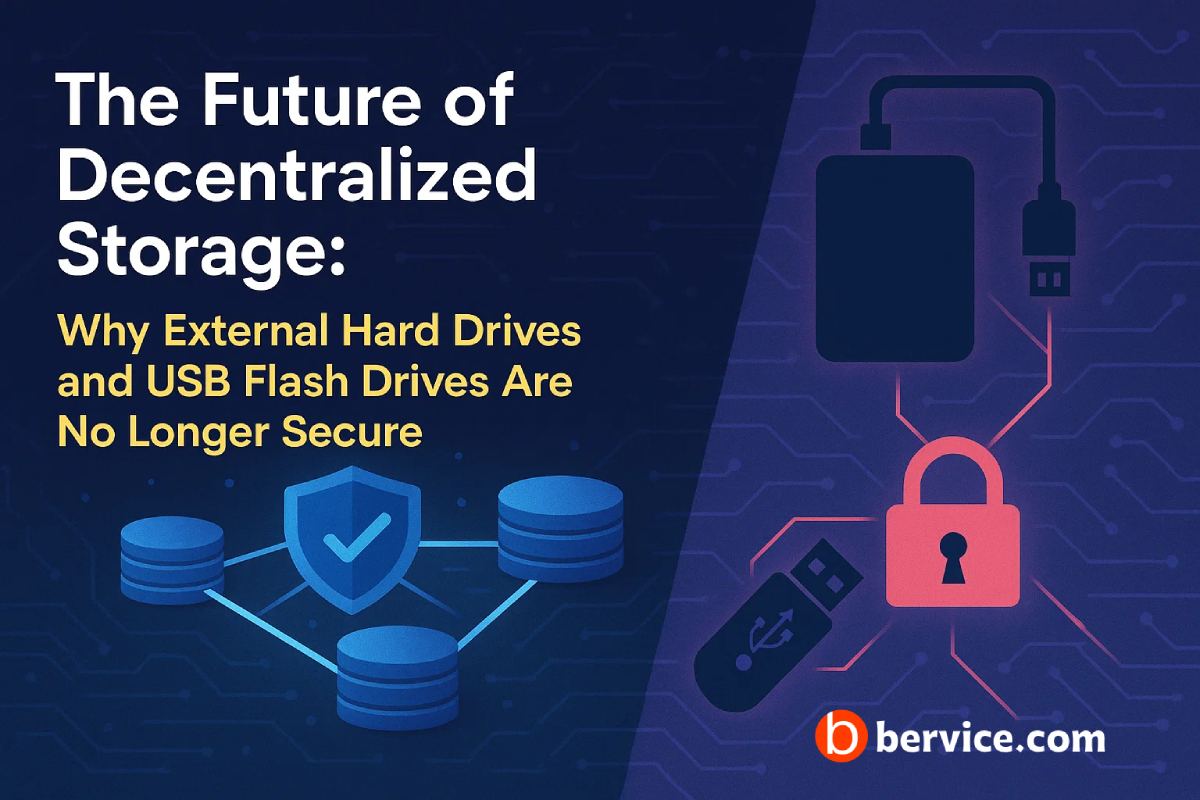
The Illusion of Physical Security
For decades, people relied on external hard drives and USB flash drives as trusted companions for storing sensitive files. They offered portability, affordability, and the comforting feeling of keeping data “close at hand.” However, this sense of security is increasingly an illusion. These physical devices are vulnerable to theft, accidental damage, and hardware failure. A single drop, water exposure, or even simple wear and tear can permanently erase valuable information. In an age where data is often more valuable than gold, depending solely on fragile devices is a serious risk.
Rising Threats: Loss, Theft, and Hacking
One of the main problems with external storage is that it can be lost or stolen. Unlike cloud-based solutions, if someone gains access to your hard drive or flash memory, they immediately possess everything stored inside, often unencrypted. Additionally, malware can infiltrate external devices when connected to compromised systems, spreading across networks or corrupting data. As cyber threats become more advanced, physical drives increasingly act as easy entry points for hackers and malicious actors.
Centralization vs. Decentralization
Traditional storage—whether local hardware or centralized cloud services—faces major vulnerabilities. Centralized servers, despite offering redundancy, remain attractive targets for cyberattacks and government surveillance. This is where decentralized storage networks come into play. Using blockchain technology and peer-to-peer protocols like IPFS (InterPlanetary File System), data is distributed across thousands of nodes worldwide. This eliminates single points of failure, making it nearly impossible for hackers or authorities to compromise or censor the information.
Advantages of Decentralized Storage
Decentralized storage offers multiple benefits over external hard drives or centralized clouds:
- Resilience: Files are redundantly stored across multiple locations, ensuring availability even if several nodes go offline.
- Security: End-to-end encryption, cryptographic verification, and blockchain-backed access controls guarantee privacy.
- Scalability: Unlike fixed-capacity drives, decentralized networks grow with user participation, offering virtually unlimited storage.
- Future-Proofing: Decentralized models align with Web3 principles, ensuring compatibility with the evolving digital economy and emerging quantum-resistant security protocols.
The Transition Ahead
The shift from physical drives to decentralized storage will not happen overnight, but it is inevitable. Just as floppy disks gave way to CDs and later cloud storage, hard drives and USB sticks are becoming relics of the past. Forward-thinking individuals, enterprises, and governments are already adopting decentralized models to safeguard critical data. The future of storage is not just about space—it is about trust, resilience, and freedom. By embracing decentralized storage, we move toward a world where data truly belongs to its owners, immune to both physical fragility and centralized control.
Connect with us : https://linktr.ee/bervice