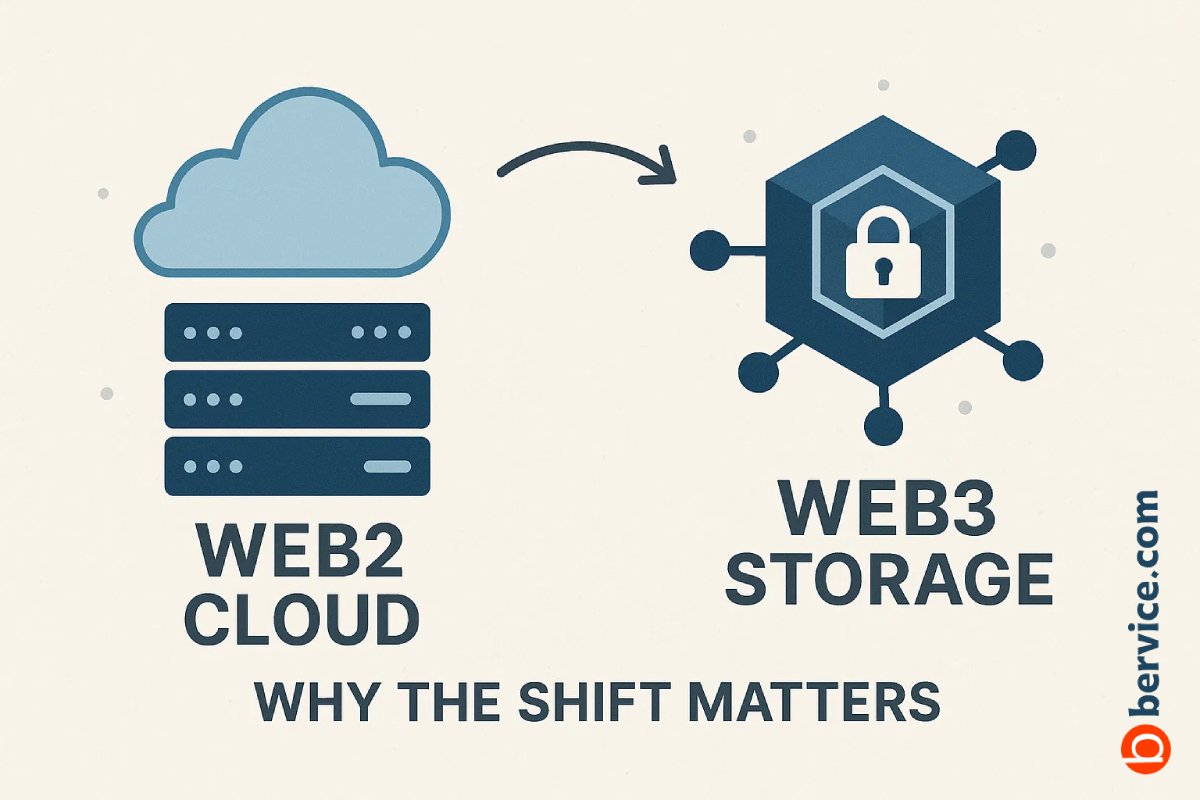
Introduction: A Paradigm Shift in Data Ownership
For more than a decade, cloud storage providers like Google Drive, Dropbox, and AWS have dominated the digital landscape, making file management seamless and scalable. However, this dominance comes at a cost: users often give up control over their data in exchange for convenience. In contrast, Web3 storage introduces a decentralized model that prioritizes ownership, transparency, and resilience. This shift is not just technological—it’s philosophical, reshaping how we think about trust in the digital economy.
The Web2 Cloud Model: Centralization and Its Limitations
Web2 cloud systems rely on centralized infrastructure operated by large corporations. While this model offers speed, integrations, and user-friendly interfaces, it also creates significant vulnerabilities. Data is stored in a few server farms, making it a target for breaches or government intervention. Moreover, users remain subject to terms of service that can restrict access, monetize personal information, or lock data behind subscription models. Centralization ultimately places control in the hands of providers rather than individuals.
Web3 Storage: Decentralization as a Foundation
Web3 storage solutions—such as IPFS, Filecoin, Arweave, and Storj—operate on decentralized networks of nodes. Instead of relying on one provider, data is distributed across a global network, removing single points of failure. Users encrypt and control their own files, and blockchain-based incentives ensure that storage providers are compensated fairly. This architecture not only strengthens security but also enables long-term immutability and verifiability of data, critical for industries like finance, healthcare, and digital identity.
Why the Shift Matters: Beyond Technology
The move from Web2 to Web3 storage matters because it reflects broader trends in digital sovereignty. In a world where privacy, censorship, and interoperability are increasingly critical, Web3 empowers users to reclaim control over their digital assets. For businesses, decentralized storage reduces dependency on single vendors and provides verifiable audit trails. For individuals, it ensures that personal data—from photos to passwords—cannot be unilaterally revoked or monetized by external corporations. The shift also aligns with the vision of a trustless, borderless digital economy where storage is not a service, but a shared infrastructure.
The Future of Storage in the Digital Economy
As adoption grows, hybrid models may emerge, blending the ease of Web2 with the resilience of Web3. Enterprises are likely to use decentralized storage for critical archives and compliance, while developers will build consumer-facing apps that abstract away technical complexity. In the long term, Web3 storage could underpin everything from metaverse assets to decentralized scientific research repositories, ensuring that humanity’s digital knowledge remains accessible, secure, and censorship-resistant.
Connect with us : https://linktr.ee/bervice