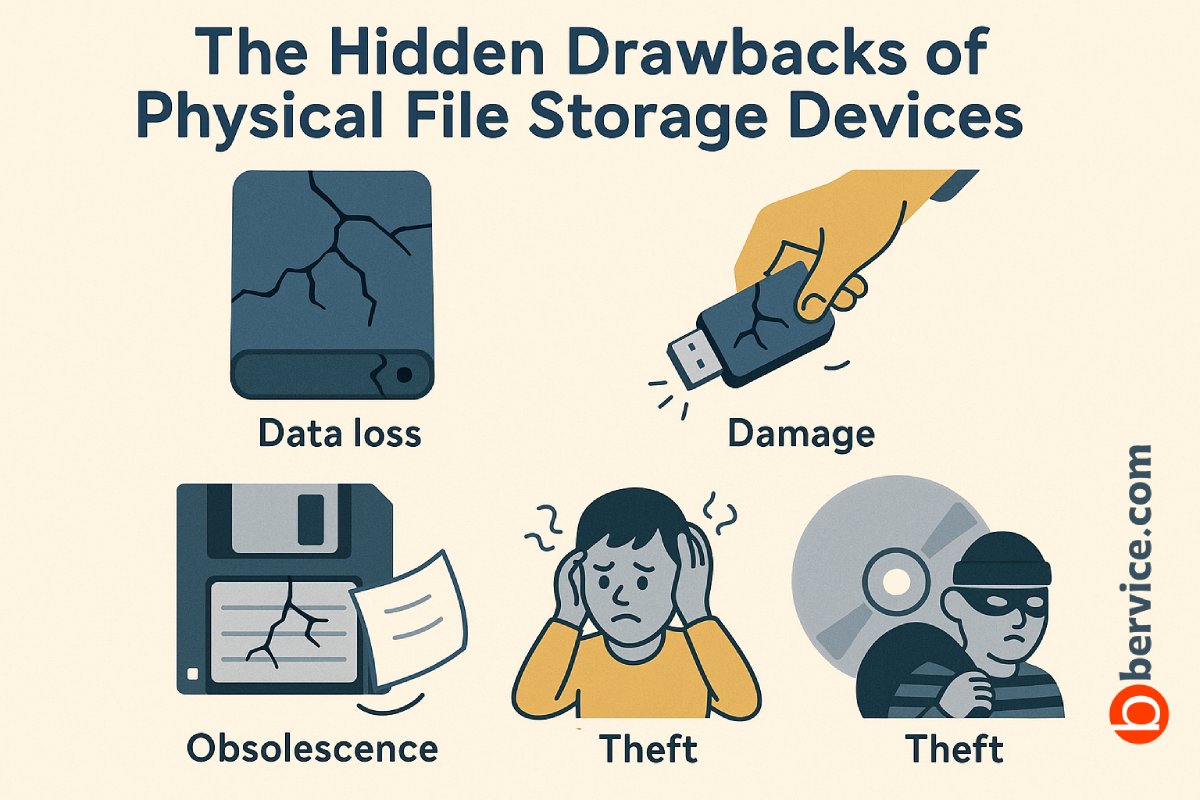
While flash drives, external hard disks, and other physical file storage devices have long served as reliable companions for data backup and transfer, they come with significant limitations in today’s fast-evolving digital landscape. Despite their convenience and portability, these hardware-based solutions present challenges in security, durability, scalability, and sustainability that make them increasingly obsolete in comparison to cloud and decentralized storage systems.
1. Limited Lifespan and Physical Vulnerability
Unlike cloud storage, physical devices degrade over time. Flash memory (used in USB drives and SSDs) can only endure a limited number of write and erase cycles before data corruption begins. Hard drives, on the other hand, contain moving mechanical parts — platters, motors, and read/write heads — that are prone to wear, shock, and heat damage. A simple drop, power surge, or water exposure can result in irreversible data loss. Even under ideal conditions, the average lifespan of a hard disk is about 3–5 years, while flash drives often fail sooner without warning.
2. Security and Privacy Risks
Physical devices pose serious security vulnerabilities. If lost or stolen, a flash drive or external hard drive can expose sensitive personal or corporate data instantly. Unlike decentralized or encrypted cloud systems, traditional devices rely heavily on the user’s diligence to encrypt files or use password protection measures that are often neglected. Moreover, malware and ransomware can easily infect USB devices, spreading across systems once plugged in. For organizations, this creates a high-risk entry point for cyberattacks and insider data leaks.
3. Limited Storage and Scalability
As digital files grow in size — from HD videos and large databases to 3D design files and AI models — physical storage quickly becomes inadequate. Even high-capacity drives have a ceiling, forcing users to constantly purchase new devices or manage complex collections of external disks. This fragmentation leads to poor data organization, duplicate files, and higher maintenance costs. In contrast, modern decentralized or cloud storage offers virtually infinite scalability, automatic synchronization, and multi-device access.
4. Environmental and Economic Costs
Physical drives also come with environmental disadvantages. They rely on rare-earth metals, plastics, and complex manufacturing processes that contribute to electronic waste (e-waste) and carbon emissions. When discarded, they pose recycling challenges due to the presence of toxic materials. Economically, maintaining physical backups — especially for large institutions — involves ongoing replacement, shipping, and maintenance expenses that accumulate over time. A single corrupted or misplaced drive can result in costly data recovery operations.
5. Inconvenience and Lack of Accessibility
Physical storage inherently limits accessibility. Users must carry, plug, and manually transfer files, which hinders collaboration and productivity in remote or global environments. Unlike cloud or decentralized systems that allow simultaneous access and real-time updates, physical storage is isolated — it requires human intervention to synchronize or share data. This lack of connectivity makes it unsuitable for modern workflows that demand instant and secure data exchange.
Conclusion: Moving Beyond Physical Boundaries
While flash drives and hard disks were essential tools in the early digital age, their drawbacks are becoming increasingly evident. The future of data storage lies in secure, decentralized, and quantum-resistant systems that eliminate physical vulnerabilities while providing resilience, privacy, and global accessibility. As technology advances, the shift from hardware-based to trustless digital storage is not just a matter of convenience — it’s a necessity for long-term security, sustainability, and innovation.
Connect with us : https://linktr.ee/bervice